
Introduction
Knowing your blood type can be useful for medical records, blood donation, pregnancy care and emergency situations. The eight commonly recognized ABO and Rh combinations are A+, A-, B+, B-, AB+, AB-, O+ and O-. Your blood type is determined by specific antigens on the surface of your red blood cells and by whether the RhD antigen is present.
Many people, however, do not remember their blood group or have never had it tested. This often leads to the question of how to know your blood type without testing. Although there are several ways to make an educated guess or locate an existing result, it is important to understand that these methods cannot replace a proper blood-type determination. Your parents’ blood groups, old medical records and previous donation information may provide useful clues, but they may not always give a complete or reliable answer.
Understanding Your Blood Type
Before considering ways to identify your blood group, it helps to understand what the result actually means. The ABO system divides blood into four primary groups: A, B, AB and O. Type A has A antigens, type B has B antigens, type AB has both, while type O has neither A nor B antigens. A second classification involves the Rh factor, particularly the RhD antigen. If it is present, the blood type is considered positive; if it is absent, the type is negative.
For example, someone may have A-positive blood, meaning the person has A antigens and the RhD antigen. Another person may have O-negative blood, meaning the person lacks A, B and RhD antigens. These distinctions are important because blood compatibility depends on the interaction between blood-group antigens and antibodies. Therefore, simply knowing that someone has “type A” is not always enough when the Rh status is also relevant.
Can Your Parents Tell You Your Blood Type?
One of the easiest ways to investigate how to know your blood type without testing is to ask your biological parents about their blood groups. Blood type is inherited genetically, so information about both parents can sometimes narrow down the possibilities. However, knowing your parents’ blood types does not always identify your exact blood type.
For example, different combinations of parental genes can produce different ABO results. The Rh factor is also inherited separately, which means knowing one parent’s positive or negative status may not be enough to determine yours. Family information is therefore best treated as a clue rather than a confirmed result.
If both parents have reliable blood-type records, you can discuss the possible combinations with a healthcare professional. This can help explain what blood types are genetically possible, but it should not be used as a substitute for blood typing when an exact result is medically necessary.
Check Previous Medical Records
Another useful approach when considering how to know your blood type without testing is to look through previous medical documents. You may have had your blood group determined during an earlier hospital visit, surgery, pregnancy-related care, blood donation or another medical procedure.
Some people assume that their blood type must be written somewhere in their standard health records. That is not always the case. A routine medical record may not include blood type unless it was relevant to a previous procedure. If you find a previous laboratory report or hospital record that clearly identifies your ABO and Rh type, keep it somewhere accessible.
It is also worth asking your healthcare provider whether an older result is available in your medical history. However, do not assume that a general blood report automatically contains your blood type. A standard complete blood count, for example, is different from blood-group testing.
Look at Previous Blood Donation Records
If you have donated blood before, the donation center may have determined your blood type as part of the donation process. Blood donation organizations determine blood groups using appropriate procedures, and you may have been informed of your type afterward.
This can be one of the most practical answers to how to know your blood type without testing because you may already have an established result without remembering it. Check old donor cards, donation records, emails, messages or other documentation provided by the blood donation organization.
If you have donated several times, your records may provide particularly useful information. Still, if you are preparing for surgery, pregnancy care or a transfusion, tell your healthcare provider that you believe you know your blood type rather than relying only on an old memory. Medical teams use appropriate testing and safety procedures when blood compatibility matters.
Ask Your Healthcare Provider
Sometimes the simplest solution is to ask a doctor, clinic or hospital whether your blood group is already documented. A healthcare professional may be able to locate a previous blood-type result in your records.
This is especially useful if you have undergone surgery, received hospital treatment or had other circumstances in which blood typing was required. However, availability of an old result depends on the healthcare facility and the records that were retained.
If there is no reliable result available, your healthcare provider can explain the appropriate way to determine your blood type. Cleveland Clinic notes that people can ask their physician about their blood type and can also learn it through blood donation or an at-home blood-type kit.
Can You Determine Blood Type From Your Appearance?
No. You cannot reliably determine whether someone has A, B, AB or O blood simply by looking at their skin, eyes, hair, veins or general appearance.
Blood type is based on specific characteristics of red blood cells, particularly the presence or absence of certain antigens. These characteristics are not visible from the outside.
Claims that a person’s personality, body shape, complexion or other physical characteristics reveal their blood group should therefore be treated skeptically. There is no reliable visual method that can replace blood-group determination.
Similarly, the color of blood does not tell you whether you are A, B, AB or O. Blood is red because of hemoglobin, and visible blood color is not a method for identifying ABO or Rh status.
Can Your Blood Type Be Predicted From Family History?

Family history can sometimes narrow the possibilities, making it useful for people researching how to know your blood type without testing. Because ABO and Rh characteristics are inherited, knowing the blood groups of biological relatives can provide helpful information.
However, genetics can be more complicated than simply matching your blood type with one parent. A child can inherit different combinations of genes from each parent. As a result, family information may suggest several possible blood types rather than one definite answer.
This is why family history should be viewed as an educational tool rather than a medical confirmation. If you need to know your blood group for a medical reason, rely on a properly documented blood-type result rather than an assumption based on relatives.
Why Guessing Your Blood Type Can Be Risky
It may seem harmless to guess your blood type when there is no immediate medical concern. However, relying on an unconfirmed blood group can become dangerous if you later need urgent medical care.
Blood transfusions require compatibility between donor and recipient blood. In medical settings, healthcare professionals check blood type and other compatibility factors before giving a transfusion.
For this reason, do not tell emergency personnel that you are definitely A+, O- or another blood group simply because a family member told you or because you found the information online. If your blood type has not been medically established, explain that you are unsure.
In an emergency, healthcare teams have established procedures for determining appropriate blood products. For example, O-negative red blood cells can be used in many emergency situations when there is not enough time to determine a patient’s blood type, although medical professionals still follow compatibility and safety protocols.
What About At-Home Blood-Type Kits?
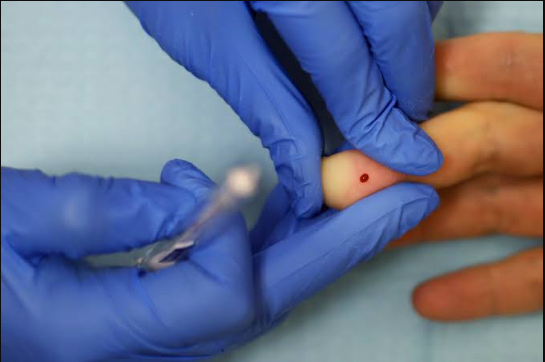
People searching for how to know your blood type without testing sometimes mean without visiting a hospital or laboratory. At-home blood-type kits are different from trying to determine your blood group through appearance or family history. These kits generally use a small blood sample and reagents to identify reactions associated with blood-group antigens.
Cleveland Clinic lists at-home blood-type kits as one option for finding out your blood type. However, if you use any home kit, carefully follow its instructions and understand its limitations. If the result is unclear or if your blood type is needed for an important medical decision, seek confirmation from a healthcare professional.
A home result should not be treated casually when blood compatibility, surgery or pregnancy-related medical care is involved. Professional testing is the safer choice when accuracy is important.
Blood Type and Pregnancy
Knowing your Rh status can be particularly important during pregnancy. The Rh factor refers to the presence or absence of the RhD antigen. Someone without the RhD antigen is Rh-negative, while someone with it is Rh-positive.
Rh incompatibility can become relevant when an Rh-negative pregnant person carries an Rh-positive fetus. Healthcare providers can screen for this situation and use appropriate treatment when needed.
Because pregnancy involves important medical decisions, guessing your blood type from family history is not appropriate. If your Rh status is unknown, your healthcare provider can determine it through standard prenatal care and testing.
Common Ways to Find Existing Blood-Type Information
If you are researching how to know your blood type without testing, consider checking these sources for an already documented result:
| Possible Source | What It Can Tell You |
|---|---|
| Previous hospital records | May contain an earlier blood-type result |
| Blood donation records | May show ABO and Rh classification |
| Previous laboratory reports | Can provide a documented blood-group result |
| Family information | May narrow possible blood types |
| Healthcare provider | May locate previous records |
| At-home blood-type kit | Can provide a preliminary blood-group result |
These options are not equally reliable. A documented laboratory result or medical record is generally more useful than a family member’s recollection. When there is uncertainty, professional confirmation is the safest approach.
Myths About Determining Blood Type
There are many claims online about determining blood type without a blood sample. Some suggest that personality traits, food preferences, physical appearance or other everyday characteristics can reveal a person’s blood group. These claims should not be confused with medical blood typing.
Blood types are determined by antigens and inherited characteristics, not by personality or visible physical traits.
Another common misconception is that knowing one parent’s blood type automatically tells you the child’s blood type. In reality, inheritance involves genetic combinations from both biological parents. Family information can be helpful, but it cannot always establish an exact result.
When You Should Get Your Blood Type Confirmed
If you only want to satisfy your curiosity, checking old records or donation information may be enough to help you locate an existing result. However, you should seek reliable confirmation if the information is needed for surgery, pregnancy care, transfusion-related concerns or another medical decision.
The key point is that how to know your blood type without testing has a limited answer. You can sometimes discover an already documented blood type without undergoing a new test, but there is no dependable way to identify your exact blood group simply by looking at yourself or using unrelated personal characteristics.
If there is no trustworthy previous result, proper blood typing is the appropriate way to establish your ABO and Rh status.
Conclusion
Learning your blood type can be useful, but guessing it is not the same as knowing it. If you are exploring how to know your blood type without testing, start by checking previous medical records, blood donation information and asking your healthcare provider whether an earlier result is available. You can also use information about your biological parents to understand what blood types may be genetically possible.
However, family history and personal clues cannot reliably replace blood typing. Blood groups are based on specific antigens and Rh characteristics, and accurate identification matters when transfusions or other medical situations are involved.
The safest approach is simple: use existing records when they are available, treat family information as a clue, and obtain professional confirmation whenever an exact blood type is medically important.