
Introduction
Astrology has been an important part of Indian culture for centuries. Many people consult astrology to understand their personality, emotional tendencies, relationships, career interests, and traditional astrological predictions. One of the most commonly discussed concepts in Vedic astrology is the rashi, which is generally associated with the position of the Moon at the time of a person’s birth. Knowing your rashi can help you explore traditional astrological interpretations and understand how zodiac signs are used in Indian astrology.
If you have ever wondered how to know your rashi, the process usually begins with your birth details. Your date of birth is useful, but your exact birth time and birthplace can make the calculation more accurate. Unlike the popular Western zodiac system, which commonly identifies signs using the Sun’s position, Vedic astrology often emphasizes the Moon sign. Understanding this distinction is important because the two systems may assign different signs to the same person.
What Is Rashi in Vedic Astrology?
In Vedic astrology, rashi refers to one of the twelve zodiac signs. These signs form an important part of a traditional astrological birth chart, commonly called a Janam Kundli. The Moon’s position in the zodiac at the time of birth is used to determine a person’s Janma Rashi, or birth Moon sign.
Each rashi is traditionally associated with particular characteristics, elements, and planetary influences. For example, Aries is associated with Mars, Taurus with Venus, Gemini with Mercury, and Cancer with the Moon. Astrologers interpret these associations within a broader birth chart rather than relying on a single sign alone.
Rashi is often used in traditional practices involving horoscope readings, matchmaking, naming ceremonies, and the selection of auspicious dates. However, astrological descriptions are cultural and interpretive beliefs, not scientifically established methods for determining personality or predicting future events. Understanding this background helps you explore astrology while keeping its limitations in mind.
How to Know Your Rashi Using Your Birth Details
The easiest way to begin is by collecting your basic birth information. These details help an astrologer or a Vedic astrology calculator estimate the Moon’s position when you were born.
Your date of birth identifies the day on which the astrological calculation should be performed. Your birth time helps determine the Moon’s exact position, particularly if the Moon was close to moving from one sign into another. Your birthplace provides the geographical information needed to interpret the recorded birth time correctly.
To find your rashi, follow these general steps:
-
Record your complete date of birth, including the day, month, and year.
-
Find your birth time from a birth certificate, hospital record, or family record if possible.
-
Note the city or town where you were born.
-
Use a Vedic astrology calculator that specifically calculates the Moon sign.
-
Enter your details carefully and check the displayed Janma Rashi.
-
If the result is unclear, consult a knowledgeable Vedic astrologer with your birth information.
These steps provide a practical starting point. The most reliable calculation depends on accurate birth details and the calculation system being used.
Understanding the Difference Between Rashi and Sun Sign
Many people become confused when their rashi differs from the zodiac sign they already know. This happens because the terms Sun sign and Moon sign refer to different astronomical positions.
In popular Western astrology, a person’s zodiac sign usually refers to the Sun’s position at birth. In Vedic astrology, the term Janma Rashi generally refers to the Moon’s position. Since the Sun and Moon occupy different parts of the zodiac, their signs do not necessarily match.
For example, someone may have a Western Sun sign of Leo but a Vedic Moon sign of Cancer. This is not automatically an error; the two signs represent different celestial positions and may also be calculated using different zodiac systems.
Vedic astrology commonly uses the sidereal zodiac, while Western astrology generally uses the tropical zodiac. These systems use different reference points, which can lead to additional differences in sign assignments.
When researching how to know your rashi, always check whether a calculator is reporting your Moon sign, Sun sign, or ascendant. Knowing which sign you are looking at prevents misunderstandings and helps you interpret the results correctly.
The Twelve Rashis and Their Traditional Associations
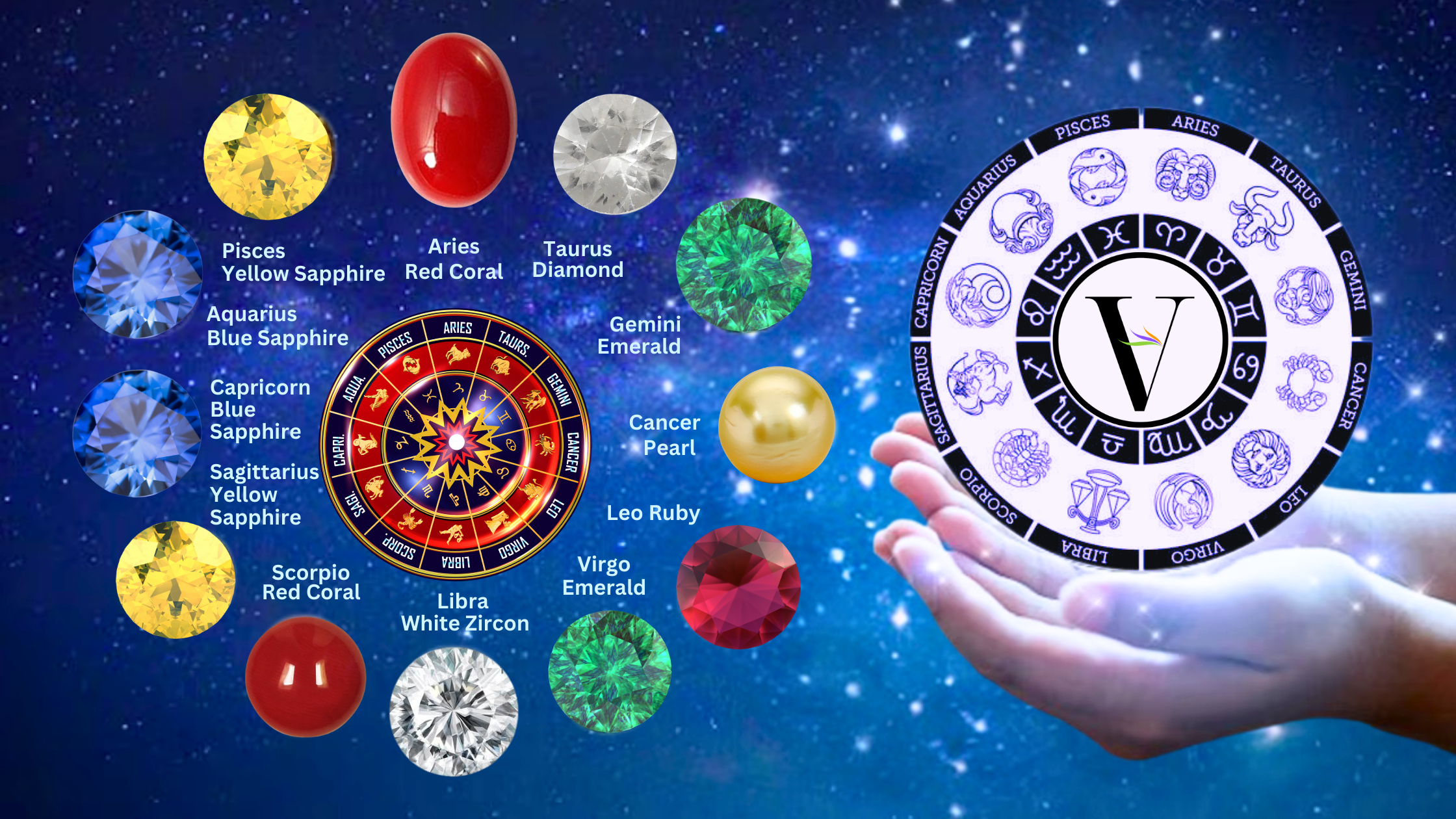
Vedic astrology divides the zodiac into twelve rashis. Each has a Sanskrit name and a corresponding commonly used English name.
| Sanskrit Rashi | English Name | Traditional Ruling Planet |
|---|---|---|
| Mesha | Aries | Mars |
| Vrishabha | Taurus | Venus |
| Mithuna | Gemini | Mercury |
| Karka | Cancer | Moon |
| Simha | Leo | Sun |
| Kanya | Virgo | Mercury |
| Tula | Libra | Venus |
| Vrishchika | Scorpio | Mars |
| Dhanu | Sagittarius | Jupiter |
| Makara | Capricorn | Saturn |
| Kumbha | Aquarius | Saturn |
| Meena | Pisces | Jupiter |
These are the traditional planetary rulers used in many Vedic astrology traditions. Interpretations can vary depending on the astrological school and the complete birth chart.
The table can help you recognize your rashi once you have calculated your Moon sign. However, it is not sufficient to identify your exact rashi from your birth month alone because the Moon changes signs approximately every two to three days.
Can You Find Your Rashi by Date of Birth Alone?
Your date of birth can provide useful information, but it may not always be enough to determine your Vedic Moon sign accurately. The Moon moves through the zodiac relatively quickly, so people born on the same date can occasionally have different rashis.
If you were born when the Moon was comfortably within a particular sign, the date may provide a useful initial indication. However, if the Moon changed signs near your birth time, even a difference of several hours could affect the result.
This is why a proper Vedic astrology calculator usually asks for your birth time and birthplace in addition to your birth date. When your birth time is unknown, some calculators can estimate possible results using a broader time range, but the answer may be uncertain.
If you only know your birth date, you can still begin exploring your astrological profile. Just avoid treating a result based on incomplete information as definitive. Checking family records or official birth documents may help you obtain the missing details.
Why Birth Time and Birthplace Matter
Your birth time and birthplace are important because astrological calculations rely on the positions of celestial bodies at a particular moment. A correct local birth time allows the calculator to determine the relevant astronomical positions more precisely.
The birthplace helps the system interpret the local time and geographical coordinates. This is especially important when records come from different time zones or when historical timekeeping practices need to be considered.
Birth time is particularly important for calculating the ascendant, also called the Lagna. Unlike the Moon sign, the ascendant can change approximately every two hours, although the actual rate varies. As a result, an inaccurate birth time may significantly affect the ascendant and other house placements in a birth chart.
Although the Moon sign and ascendant are different concepts, both are frequently considered in a detailed Vedic horoscope. If you are exploring astrology beyond your basic rashi, accurate birth information can make the chart calculation more useful within that tradition.
How to Use an Online Rashi Calculator
An online rashi calculator can be a convenient option for beginners who want to obtain their Moon sign without manually calculating planetary positions. Many tools provide a basic result after you enter your birth information.
First, select a calculator that clearly identifies itself as a Vedic or sidereal Moon-sign calculator. Enter your date of birth in the correct format, followed by your recorded birth time and birthplace. Check that the time is entered correctly, including AM or PM where applicable.
After submitting the information, review the result carefully. Some calculators display the rashi alongside the Nakshatra, Lagna, or other chart details. These are separate astrological concepts, so do not assume that every result shown represents your Moon sign.
You may also find differences between calculators because of their chosen settings, such as the ayanamsha used to define the sidereal zodiac. If two results disagree, compare the settings and verify your birth information before deciding that one of them is incorrect.
What Is the Difference Between Rashi, Nakshatra, and Lagna?
Rashi, Nakshatra, and Lagna are three important terms in Vedic astrology, but they describe different aspects of a traditional birth chart.
Rashi usually refers to the Moon sign when discussing a person’s Janma Rashi. The zodiac is divided into twelve rashis, each covering 30 degrees of the zodiac.
Nakshatra refers to one of the 27 lunar mansions used in Vedic astrology. The Moon’s position determines the birth Nakshatra, which is further divided into four padas, or quarters. Nakshatra is often used in traditional naming customs and astrological interpretations.
Lagna, or ascendant, is the zodiac sign rising on the eastern horizon at the time and place of birth. It depends strongly on the exact birth time and geographical location.
Understanding these differences is useful when learning how to know your rashi because websites and horoscope reports sometimes display all three details together. Identifying the correct field ensures that you do not accidentally confuse your Moon sign with your Nakshatra or ascendant.
Why Do People Want to Know Their Rashi?
People explore their rashi for several cultural, personal, and traditional reasons. In India, rashi may be considered during horoscope discussions, religious ceremonies, matchmaking, and other family customs. Some people also read daily or monthly horoscopes as a form of entertainment or personal reflection.
In traditional astrology, each sign is associated with certain qualities and planetary influences. Readers may use these descriptions to reflect on their habits, preferences, relationships, or personal goals. Others are interested in learning more about their birth chart because astrology has a long-standing place in their family’s cultural practices.
It is important to approach these interpretations thoughtfully. A person’s personality, abilities, relationships, and future are shaped by many complex factors, and a zodiac sign cannot scientifically establish these characteristics. Rashi can be meaningful as a cultural or spiritual concept without being treated as a substitute for evidence-based decision-making.
Common Mistakes to Avoid When Finding Your Rashi
Finding your rashi is generally straightforward when you use accurate information, but a few common mistakes can lead to confusion.
One mistake is relying only on your birth month. Month-based zodiac charts usually refer to Western Sun signs and do not necessarily identify your Vedic Moon sign. Another mistake is entering an incorrect birth time, especially when the Moon was near the boundary between two signs.
People sometimes confuse the rashi with the Nakshatra or Lagna shown in an online birth chart. These terms are related within Vedic astrology, but they are not interchangeable. Choosing a tropical zodiac calculator when you intended to use a sidereal Vedic system can also produce a different result.
Finally, avoid sharing unnecessary personal information on unfamiliar websites. Your birth date, time, and birthplace may be enough for a basic calculation, so check a site’s privacy practices before entering additional details. If your birth records are incomplete or different calculators give conflicting results, consider seeking clarification from a qualified practitioner rather than relying on an uncertain guess.
Frequently Asked Questions
1. How can I know my rashi at home?
You can find your rashi by using a Vedic astrology calculator and entering your date of birth, birth time, and birthplace. Check that the tool calculates your Moon sign rather than only your Western Sun sign.
2. Can I find my rashi using my name?
Some traditional naming systems associate particular starting sounds with rashis or Nakshatras. However, a name alone cannot reliably establish your actual birth Moon sign. Your birth details provide a more appropriate basis for the calculation.
3. Is rashi the same as a zodiac sign?
Rashi is a Sanskrit term for a zodiac sign. In common Vedic astrology usage, Janma Rashi refers to the Moon sign. A Western zodiac sign usually refers to the Sun sign, so the two may be different.
4. What should I do if I do not know my birth time?
Try checking your birth certificate, hospital documents, or family records. Without an accurate birth time, some calculations may remain uncertain, particularly if the Moon changed signs around the time you were born.
5. Can two people born on the same day have different rashis?
Yes. The Moon moves through the zodiac during the month, and its position may change signs within a single calendar day. Two people born on the same date can therefore have different Moon signs, depending on their birth times and the calculation system used.
Conclusion
Learning how to know your rashi starts with understanding the difference between your Moon sign, Sun sign, Nakshatra, and ascendant. In Vedic astrology, your Janma Rashi is generally determined by the Moon’s position at the time of your birth. For a more accurate calculation, collect your date of birth, birth time, and birthplace, then use a Vedic astrology calculator that clearly identifies the Moon sign.
Although traditional astrology offers a framework for cultural practices and personal reflection, its interpretations should not be considered scientifically proven predictions. By checking your birth information carefully and understanding the terminology, you can explore your rashi with greater clarity and avoid common calculation mistakes.