
Introduction
Many people interested in astrology want to understand their Rashi because it is an important concept in traditional Indian or Vedic astrology. Rashi is generally associated with the position of the Moon at the time of a person’s birth. This makes it different from simply identifying a zodiac sign by birth date alone. Anyone searching for how to know your rashi should understand that an accurate calculation normally requires more than the day and month of birth. Birth date, exact birth time, and birthplace can help determine the Moon’s position and therefore the corresponding Rashi. Astrology is a traditional belief system, and its interpretations are not scientific measurements of personality or future events. Nevertheless, Rashi remains a widely used concept in Indian astrology and cultural practices. Learning the basic process can help readers understand astrology charts, daily horoscope references, and the terminology used in traditional astrological discussions.
What Is Rashi?
In Vedic astrology, Rashi generally refers to the zodiac sign occupied by the Moon at the time of birth. The traditional zodiac is divided into twelve Rashis, each covering a specific section of the zodiac. The Moon moves relatively quickly through these signs, which is why birth time can be important when determining a person’s Rashi.
Rashi is often called the Moon sign in English explanations. It is different from the Sun sign commonly used in Western astrology. Because the Moon changes zodiac signs approximately every two to three days, two people born on the same date may potentially have different Rashis if they were born at different times or locations. This is one reason an accurate calculation uses detailed birth information.
How to Know Your Rashi Using Birth Details
The basic answer to how to know your rashi is to calculate the position of the Moon at the exact time and place of birth. The three important details are usually the date of birth, birth time, and birthplace. These details allow an astrology calculation to determine where the Moon was positioned within the traditional zodiac.
If the exact birth time is unavailable, it may still be possible to estimate the Rashi using other information, but the result can be less certain, particularly when the Moon is close to changing signs. Therefore, people who want a more precise traditional astrology chart generally use the most accurate birth information available. A birth certificate, hospital record, or family record may sometimes help verify the original time.
The 12 Rashis in Vedic Astrology
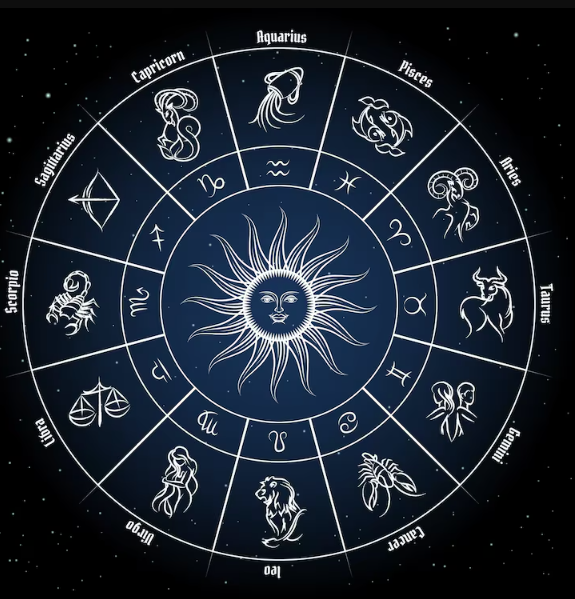
Vedic astrology traditionally recognizes twelve Rashis. They are commonly known in English by names corresponding to Aries, Taurus, Gemini, Cancer, Leo, Virgo, Libra, Scorpio, Sagittarius, Capricorn, Aquarius, and Pisces. In Sanskrit and many Indian languages, they have traditional names such as Mesha, Vrishabha, Mithuna, Karka, Simha, Kanya, Tula, Vrishchika, Dhanu, Makara, Kumbha, and Meena.
Each Rashi is associated with particular symbolic characteristics in traditional astrology. However, interpretations can differ between astrological traditions and practitioners. The Rashi itself is determined through the Moon’s astronomical position within the zodiac used for the particular astrological system, while personality descriptions are interpretive traditions rather than scientifically established conclusions.
Rashi and Moon Sign
Rashi is commonly described as the Moon sign because the Moon’s position is used to determine it. This differs from the Sun sign, which is based on the Sun’s apparent position in the zodiac. The distinction can be confusing for people who are familiar mainly with Western horoscope systems.
For someone learning how to know your rashi, understanding the Moon’s role is therefore essential. A person’s Sun sign and Rashi can be different. For example, someone might have a particular Sun sign based on their birth date while their Moon was positioned in another sign at the exact time of birth. Both systems use celestial positions, but they serve different roles within their respective astrological traditions.
Why Birth Time Matters
Birth time can be important because the Moon moves through the zodiac considerably faster than the Sun. Although the Moon usually remains in a sign for more than one day, its exact position changes continuously. When the Moon is close to a boundary between two signs, even a difference in birth time can potentially affect the calculated Rashi.
This is why entering only a birth date into a general zodiac calculator may not always provide the same result as a detailed Vedic astrology chart. For a more precise traditional calculation, the exact birth time and location are generally preferred. If the recorded time is uncertain, the result should be treated as approximate rather than completely certain.
Why Birthplace Is Also Important
Birthplace provides geographical information that helps calculate the local time and astronomical position used in an astrology chart. Two people born at the same moment in different parts of the world can have different local times, and geographical coordinates can influence chart calculations.
When researching how to know your rashi, users should therefore enter the actual place of birth rather than their current location. The relevant location is where the person was born. Modern astrology software and online calculators can use the location, date, and time to perform the necessary calculations automatically.
Rashi vs Zodiac Sign
The words “Rashi” and “zodiac sign” are sometimes used interchangeably, but they can refer to different concepts depending on the context. In Vedic astrology, Rashi generally refers to the Moon’s zodiac sign at birth. In popular Western astrology, “zodiac sign” often refers to the Sun sign.
This difference explains why a person may receive different answers when using different astrology systems. Neither result necessarily represents an error; the systems may simply be using different reference points and calculation methods. Anyone comparing horoscope information should first identify whether the source is using Vedic or Western astrology.
Rashi and Nakshatra
Rashi is not the only lunar concept used in Vedic astrology. Nakshatra is another important system based on the Moon’s position. Traditional Vedic astrology divides the zodiac into 27 Nakshatras, each covering a smaller portion of the zodiac than a Rashi.
A person’s Moon can therefore be associated with both a Rashi and a Nakshatra. The Nakshatra provides a more detailed subdivision of the Moon’s position and is often used in traditional horoscope interpretation. Understanding this distinction can make Vedic astrology terminology easier to follow, especially when reading a detailed birth chart.
Using a Rashi Calculator
People who want to find their Rashi can use a traditional astrology calculator by entering their birth details. Such calculators typically ask for the date, exact time, and birthplace. The software then calculates the Moon’s position and identifies the corresponding Rashi according to its selected calculation system.
When using a calculator, it is important to enter information carefully. A wrong time zone, incorrect birthplace, or inaccurate birth time can produce a different chart. Users should also understand which zodiac system and calculation settings are being used. Different astrological traditions may use different methods, so results from two tools may occasionally differ.
What If You Do Not Know Your Birth Time?
Not everyone knows their exact birth time. Some people may only know the date, while others may have a rough estimate such as morning or evening. In such situations, determining the Rashi may become less precise, especially if the Moon changed signs around that date.
Some traditional astrologers use methods intended to estimate or rectify birth times, but these methods involve astrological interpretation and are not scientifically validated. If an exact birth time is unavailable, it is better to recognize the uncertainty rather than treating an estimated result as unquestionably accurate.
Traditional Importance of Rashi
Rashi has an important place in many forms of Indian astrology. It may be referenced in horoscope readings, traditional calendars, compatibility discussions, and interpretations of planetary movements. Some people also use their Rashi when reading daily or monthly horoscopes.
The cultural importance of Rashi varies from person to person. Some individuals treat astrology as a meaningful traditional practice, while others view it primarily as cultural entertainment. Understanding the tradition does not require accepting every astrological interpretation as fact. Readers can explore the subject while keeping the distinction between cultural belief and scientific evidence in mind.
Common Mistakes When Finding Rashi
One common mistake is assuming that the Rashi can always be determined from the birth date alone. Since Rashi is based on the Moon’s position, the time and location of birth can matter. Another mistake is confusing Rashi with the Western Sun sign.
People may also enter incorrect time-zone information or choose the wrong birthplace from a calculator’s list. Small data-entry errors can affect the calculated chart. Anyone researching how to know your rashi should therefore verify birth details carefully and understand which astrology system the calculator uses before interpreting the result.
How to Use Your Rashi Information
Once a person knows their Rashi, they may encounter it in different types of traditional astrology content. Horoscope articles may discuss planetary movements in relation to the Moon sign, while traditional astrology resources may provide descriptions associated with each Rashi.
It is useful to approach such information thoughtfully. Personality descriptions can be broad and may not apply equally to everyone. Similarly, predictions should not be treated as guaranteed outcomes. Astrology can be explored as a cultural or personal-interest subject without allowing generalized horoscope statements to replace practical decision-making.
Rashi and Personal Reflection
For many people, learning their Rashi is an opportunity to explore cultural traditions, symbolism, and personal reflection. Reading about a particular Rashi may encourage someone to think about their habits, preferences, goals, or relationships. However, these reflections are subjective and should not be treated as scientific personality assessments.
The value of learning about Rashi can therefore depend on how someone approaches the subject. It can be part of cultural learning, family traditions, curiosity, or entertainment. Keeping expectations realistic allows people to explore astrology without confusing traditional interpretations with scientifically verified predictions.
Conclusion
Learning how to know your rashi begins with understanding that Rashi in Vedic astrology generally refers to the zodiac sign occupied by the Moon at the time of birth. Unlike a simple birth-date-based Sun sign, determining Rashi usually involves the date, exact birth time, and birthplace. The twelve Rashis form an important part of traditional Indian astrology, while related concepts such as Nakshatra provide additional divisions of the lunar zodiac. Online calculators can make the calculation easier, but users should enter accurate birth information and check which astrological system is being used. If the exact birth time is unknown, the result may be uncertain. Rashi can be explored as part of India’s rich astrological and cultural traditions, while its personality descriptions and predictions should be understood as traditional interpretations rather than scientifically established facts.