
Introduction
Many people interested in Indian astrology want to understand their rashi, especially when reading horoscopes, preparing a birth chart, or learning more about traditional astrology. The word rashi is commonly used to describe a zodiac sign in Vedic astrology, but determining it can be different from simply checking a zodiac sign based on a birth date. In traditional Jyotish, the Moon’s position at the time of birth is an important factor in identifying a person’s Janma Rashi, commonly called the Moon sign.
Knowing the correct birth date alone may not always be enough to determine the exact rashi. Birth time and birthplace can also matter because the Moon moves through the zodiac and can change signs during a particular day. This is why people searching how to know your rashi often need to understand the difference between a date-based Sun sign and a Moon-based Rashi. Once the relevant birth details are available, the rashi can be calculated using the Moon’s astronomical position according to the chosen astrological system.
What Is Rashi?
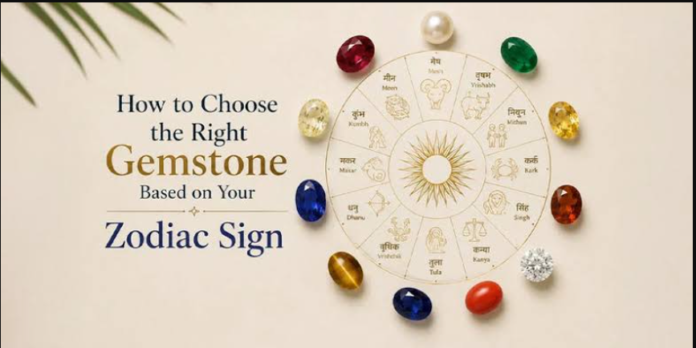
In Vedic astrology, the zodiac is divided into twelve rashis. Each rashi corresponds broadly to one of the twelve zodiac signs used in Jyotish. The traditional names are Mesha, Vrishabha, Mithuna, Karka, Simha, Kanya, Tula, Vrishchika, Dhanu, Makara, Kumbha, and Meena.
Rashi is often associated with the position of the Moon at the time of birth. Because the Moon moves relatively quickly through the zodiac, its position can provide a more time-sensitive birth indication than a Sun sign based only on the date.
The term can sometimes be used differently in casual conversations, so it is useful to clarify whether someone means the Janma Rashi, Moon sign, Sun sign, or another astrological placement. In traditional Vedic astrology, Janma Rashi generally refers to the zodiac sign occupied by the Moon at birth.
How to Know Your Rashi From Birth Details
The easiest way to understand how to know your rashi is to begin with three important pieces of information: your date of birth, exact or approximate birth time, and birthplace. These details are used to determine the astronomical position of the Moon at the moment of birth.
The date identifies the general period being examined, while the time can become important when the Moon is close to the boundary between two zodiac signs. The birthplace is needed because astronomical positions are calculated relative to location and time.
Once these details are entered into an appropriate Vedic astrology birth-chart calculation, the Moon’s zodiac position can be identified. The corresponding zodiac sign is generally considered the person’s Janma Rashi.
Why Birth Time Matters
Birth time can be particularly important when determining a rashi. The Moon changes zodiac signs approximately every two to three days, although the exact timing varies according to its astronomical movement. Therefore, two people born on the same calendar date may potentially have different Moon signs if the Moon changes signs during that date.
An incorrect birth time can therefore produce a different result when the Moon is close to a sign boundary. Even a difference of several hours may matter in certain cases.
For people who do not know their exact birth time, the result may require additional caution. Some astrologers use birth-time rectification techniques, but these are interpretive methods rather than direct astronomical observations. For a straightforward calculation, having a reliable recorded birth time is preferable.
The 12 Rashis
The twelve traditional rashis correspond to the following commonly used zodiac names:
Mesha corresponds to Aries, Vrishabha to Taurus, Mithuna to Gemini, and Karka to Cancer. The sequence continues with Simha for Leo, Kanya for Virgo, Tula for Libra, and Vrishchika for Scorpio.
The final four are Dhanu for Sagittarius, Makara for Capricorn, Kumbha for Aquarius, and Meena for Pisces. These names are widely used in Indian astrology and are based on the twelve-part zodiac.
Each rashi has traditional associations involving elements, qualities, planetary rulers, and other astrological concepts. However, knowing a person’s rashi alone does not provide a complete birth-chart interpretation.
Rashi and Moon Sign
Rashi is often described as the Moon sign because Janma Rashi is determined from the Moon’s zodiac position at birth. This differs from systems where a person’s primary zodiac sign is determined by the Sun’s position.
The Moon is traditionally associated with emotions, mental tendencies, habits, and subjective experiences in Vedic astrology. For this reason, the Moon sign is given significant importance in many Jyotish interpretations.
When people ask how to know your rashi, they are often asking for their Moon sign rather than their Western Sun sign. Understanding this distinction can prevent confusion when different astrology websites or applications provide apparently different zodiac signs.
Rashi vs Western Zodiac Sign
One of the most common sources of confusion is the difference between Vedic and Western astrology. Western astrology generally uses the tropical zodiac, while traditional Vedic astrology generally uses the sidereal zodiac.
Because these systems use different reference points for the zodiac, the same birth details can sometimes produce different sign results. This does not necessarily mean that one calculation is simply an error; the systems use different frameworks.
For someone learning how to know your rashi, it is therefore important to use a calculation method specifically intended for Vedic or Jyotish astrology when looking for Janma Rashi.
What Is Janma Rashi?
Janma Rashi literally refers to the birth sign and is commonly used for the zodiac sign occupied by the Moon at the time of birth. It is one of the foundational concepts in Vedic astrology.
A person’s Janma Rashi can be used in traditional horoscope interpretation, Panchang-related calculations, compatibility discussions, and other Jyotish practices. However, astrologers generally consider the entire birth chart rather than interpreting one placement in isolation.
The Moon’s exact degree, the nakshatra it occupies, planetary aspects, house placement, and other chart factors can all contribute to a more detailed interpretation.
Rashi and Nakshatra
Rashi and nakshatra are related but different concepts. While the zodiac is divided into twelve rashis, Vedic astrology traditionally divides the zodiac into 27 nakshatras, or lunar constellational sectors.
The Moon occupies both a particular rashi and a particular nakshatra at the time of birth. The nakshatra provides a more detailed division of the zodiac and is often used in traditional birth-chart interpretation.
This is another reason why simply knowing the birth date may not provide all the information someone wants from a Vedic astrology chart. Accurate birth details allow more precise calculation of both rashi and nakshatra.
Can You Know Your Rashi Without Birth Time?
People sometimes ask whether it is possible to determine their rashi without knowing their exact birth time. The answer depends on the Moon’s position during the relevant date.
If the Moon remained within the same zodiac sign throughout the person’s birth date, the rashi may be identifiable from the date and location with reasonable confidence. However, if the Moon changed signs during that day, the birth time becomes important.
Therefore, someone researching how to know your rashi without a birth time should avoid assuming that a date-only result is always accurate. Checking the Moon’s sign transition for the specific date can help determine whether the missing birth time creates uncertainty.
How Birthplace Affects the Calculation

Birthplace is another important input for an accurate birth chart. A person’s birth location determines the local time used for astronomical calculations and affects the relationship between universal time and local time.
For determining a Moon sign, the effect may sometimes be less obvious than for calculating an ascendant, but location remains part of a properly constructed birth chart. Different locations can have different local times and geographic coordinates.
This is why reliable birth-chart calculations normally ask for the city or location where the person was born rather than relying solely on the date.
Rashi and Lagna Are Different
Rashi should not be confused with Lagna, or Ascendant. Rashi is commonly determined from the Moon’s position, while Lagna refers to the zodiac sign rising on the eastern horizon at the time and place of birth.
The Ascendant changes much more quickly than the Moon sign, typically moving through a zodiac sign in roughly two hours, although the exact duration varies with geographic location. Consequently, accurate birth time is especially important when calculating Lagna.
A complete Vedic birth chart can contain both Rashi and Lagna, along with planetary positions and other important components.
Why People Want to Know Their Rashi
There are many reasons people search how to know your rashi. Some are interested in traditional astrology and want to read daily or monthly horoscopes based on their Moon sign. Others may be preparing a Kundli or learning about their birth chart.
Rashi can also be used in traditional discussions involving nakshatras, planetary periods, compatibility, and auspicious timing. In some families, knowing the Janma Rashi is part of cultural or astrological traditions.
People may also simply be curious about the difference between their Western zodiac sign and their Vedic Moon sign. Learning the underlying calculation can make the subject easier to understand.
How to Check Your Rashi Accurately
To determine your rashi as accurately as possible, collect your full date of birth, birth time, and birthplace. Use a calculation method that specifically identifies the Moon’s sidereal zodiac position if your goal is to find the traditional Vedic Janma Rashi.
After obtaining the result, check that the calculation uses the intended astrological system. Different settings, such as ayanamsha choices, can affect some chart calculations.
If your birth time is uncertain, it is better to acknowledge that uncertainty rather than treating a potentially borderline result as exact. For important traditional or personal uses, consulting a qualified practitioner may provide additional context.
Common Mistakes When Finding Rashi
A common mistake is using a Western Sun-sign calculator and assuming its result is automatically the Vedic Janma Rashi. Another is entering an incorrect birth time or selecting the wrong birthplace.
People can also confuse Rashi with Lagna or Nakshatra. These are separate components of a birth chart and should not be treated as interchangeable.
Another mistake is assuming that a person’s entire personality can be explained by one zodiac sign. Traditional Vedic astrology itself uses many chart factors for detailed interpretation. Rashi is an important component, but it is not the entire Kundli.
Rashi in Everyday Astrology
Rashi is frequently used in Indian astrology publications and traditional horoscope discussions. Daily forecasts may be organized according to the twelve Moon signs, allowing readers to locate their relevant section.
However, horoscope interpretations are part of an astrological tradition rather than scientifically established methods for predicting individual behavior or future events. People can explore astrology as a cultural, historical, or personal-interest subject while recognizing the distinction between traditional interpretation and scientific evidence.
Understanding this distinction can help readers approach astrology thoughtfully without treating generalized horoscope statements as guaranteed outcomes.
Conclusion
Learning how to know your rashi begins with understanding that traditional Vedic Janma Rashi is generally based on the Moon’s zodiac position at the time of birth. Date, birth time, and birthplace can all contribute to an accurate calculation, particularly when the Moon is near a zodiac-sign boundary.
The twelve rashis correspond to the familiar zodiac signs but are interpreted within the framework of Vedic astrology. Rashi is different from Lagna, Nakshatra, and the Western Sun sign, although all can appear together in a detailed birth chart.
For anyone interested in how to know your rashi, the most reliable approach is to use accurate birth information and a calculation method designed for Vedic astrology. Once the Moon’s position is identified, the resulting Janma Rashi can serve as one part of a broader understanding of a traditional Vedic birth chart.