
Introduction
Finding the correct ring size is important when buying a new ring, ordering jewelry online, choosing a gift, or designing a custom piece. A ring that is too tight can feel uncomfortable and may be difficult to remove, while one that is too loose can rotate constantly or slip off. Fortunately, you do not always need to visit a jewelry store to get an approximate measurement. There are several simple ways to determine your size at home using an existing ring, a strip of paper, a piece of string, or a printable measuring guide. Learning how to know your ring size can make online jewelry shopping much easier and reduce the possibility of ordering the wrong size. However, measurements should be taken carefully because finger size can change throughout the day due to temperature, activity, and other factors. Taking more than one measurement and comparing the results can improve accuracy.
Why Knowing Your Ring Size Matters
Ring size affects both comfort and security. A properly fitted ring should slide over the finger joint with gentle resistance while remaining comfortable once it reaches the base of the finger. If a ring is excessively tight, it can cause discomfort and may become difficult to remove. If it is too loose, it may move around or fall off during everyday activities.
Knowing your measurement before purchasing jewelry can save time and reduce exchanges. This is especially useful when shopping online, where trying on a ring before buying it may not be possible. Understanding how to know your ring size also helps when selecting rings for different fingers because your index, middle, ring, and little fingers may have different measurements. Even the same finger on your opposite hand may not be exactly the same size.
Measure an Existing Ring
One of the easiest methods is to use a ring that already fits the intended finger comfortably. Place the ring on a flat surface and measure the inside diameter from one inner edge to the opposite inner edge. Make sure the measurement is taken straight across the center rather than along the outside of the ring.
Once you have the inside diameter, you can compare the measurement with a reliable ring-size chart to identify the corresponding size. This method works particularly well when you already own a ring that fits correctly. However, it is important to use a ring that is intended for the same finger. A ring that fits your middle finger may not provide an accurate measurement for your ring finger. When learning how to know your ring size, choosing the correct reference ring is just as important as measuring it carefully.
Measure Your Finger With Paper
Another simple method involves using a narrow strip of paper. Wrap the paper around the base of the finger where you expect the ring to sit. Keep it comfortably snug rather than pulling it tightly. Mark the point where the end of the paper meets the section wrapped around your finger.
Lay the paper flat and measure the distance between the starting edge and the marked point. This measurement represents your finger’s approximate circumference. You can then compare it with an appropriate ring-size conversion chart. When considering how to know your ring size, this technique can be useful because it requires only ordinary household materials. The main challenge is keeping the paper level and ensuring it is neither too tight nor too loose. Having another person help with the marking can sometimes produce a more consistent measurement.
Using String for Measurement
String can also be used to estimate finger circumference. Wrap a thin piece of non-stretchy string around the base of the finger and mark where the ends meet. Remove the string and measure the marked length with a ruler.
The important word here is “non-stretchy.” Elastic or flexible string can expand during measurement and produce a result that is smaller than your actual finger circumference. The string should sit naturally around the finger without cutting into the skin. This method is convenient, but it may be less precise than a professional ring-sizing tool. If you are researching how to know your ring size, use the string method as an initial estimate and repeat the measurement several times to check whether you get a similar result.
Use a Ring Sizing Tool
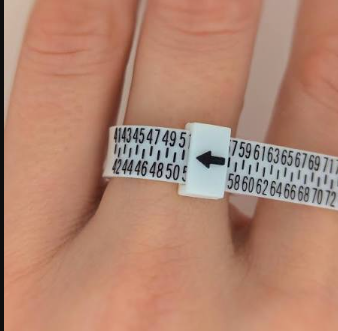
A ring-sizing tool is one of the more practical options for home measurement. Ring sizers are available as sets of individual rings or as a connected strip containing multiple sizes. You place a suitable size on your finger and check how comfortably it fits.
When using a ring sizer, the ring should pass over the widest part of the finger without excessive force. At the same time, it should not be so loose that it easily slides off. Try moving your hand normally and gently shaking it to see whether the size remains secure. This can provide a better indication than simply checking whether the ring fits while your hand is completely still. For anyone learning how to know your ring size, a dedicated sizing tool can be more consistent than improvised household methods.
Consider Finger Joint Size
The base of your finger is not necessarily the widest point. Many people have larger knuckles or joints, and this can affect ring fit. A ring needs to pass over the widest part of the finger while still fitting comfortably at the base.
When measuring, pay attention to both areas. If there is a substantial difference between the base circumference and knuckle circumference, the ring needs to accommodate the larger measurement. A ring that fits perfectly at the base but cannot comfortably pass over the knuckle is not practical. When learning how to know your ring size, considering the complete shape of the finger can help explain why a measurement that seems correct on paper may not feel right when trying on an actual ring.
Measure at the Right Time
Finger size can fluctuate during the day. Temperature, physical activity, hydration, and other everyday factors can cause fingers to become slightly larger or smaller. Measuring immediately after waking up or after exposure to very cold conditions may therefore produce a different result from measuring later in the day.
For a more representative measurement, measure when your hands are at a comfortable, normal temperature. Avoid measuring immediately after strenuous exercise or when your fingers feel unusually swollen. Taking measurements at two or three different times can help identify a consistent range. If you are researching how to know your ring size, consistency is more useful than relying on a single measurement taken under unusual conditions.
Avoid Measuring Cold Fingers
Cold temperatures can cause fingers to contract temporarily, potentially resulting in a smaller measurement. If you measure while your hands are very cold, the resulting ring size may not be comfortable under normal conditions.
Allow your hands to return to a normal temperature before measuring. Similarly, extremely hot conditions can sometimes cause temporary swelling. The goal is to measure your finger under ordinary circumstances rather than during an unusual physical state. This simple consideration can make a noticeable difference when ordering a ring. If the measurement falls between two sizes, understanding how temperature affects your fingers can also help you decide whether another measurement is necessary.
Ring Width Can Affect Fit
The width of a ring can influence how it feels on the finger. Narrow bands generally feel different from wide bands, even when both have the same nominal size. A wide band covers more of the finger and may feel tighter than a thin band.
If you are ordering a wide wedding band, statement ring, or multiple rings that will sit next to one another, you may need to consider how the combined width affects comfort. Jewelry professionals can provide guidance when the design is unusually wide. Learning how to know your ring size is therefore not only about measuring circumference; it is also about understanding how the physical design of the ring interacts with your finger.
Check International Ring Sizes
Ring sizes are not represented by one universal system. Different countries and jewelry markets may use different sizing conventions. Some systems use numbers, while others use letters or measurements based on circumference or diameter.
Before ordering a ring from another country, check which sizing system the seller uses. Do not assume that a size number has the same meaning everywhere. A reliable conversion chart can help translate your measurement between systems. When learning how to know your ring size, record your actual finger circumference or inside-ring diameter as well as the corresponding local size. Keeping the physical measurement gives you a useful reference if you shop with different jewelry retailers.
Measuring for a Surprise Gift
Determining someone’s ring size can be more difficult when the ring is intended as a surprise. One option is to discreetly measure a ring the recipient already wears on the same finger. Make sure the ring actually fits that finger comfortably and is not simply a decorative ring worn loosely.
Another possibility is to ask a friend or family member for assistance if they know the person’s size. Guessing based solely on height, hand size, or general appearance is unreliable because finger proportions vary significantly. If you need to learn how to know your ring size for someone else, an existing correctly fitting ring is generally more useful than trying to estimate based on physical appearance.
Common Ring-Sizing Mistakes
Several simple mistakes can lead to an inaccurate measurement. Measuring the outside diameter of a ring instead of the inside diameter is one example. Pulling string or paper too tightly is another. Measuring only once can also produce a misleading result.
Another common mistake is measuring the wrong finger. A ring intended for the right-hand ring finger should not automatically be ordered based on the left-hand ring finger. Additionally, people sometimes overlook the knuckle and focus only on the base. When considering how to know your ring size, careful technique matters just as much as the measuring material. If the result seems unusual compared with rings you already own, repeat the process and verify the measurement.
What to Do If You Are Between Sizes
Sometimes a measurement falls between two standard sizes. In such cases, the appropriate choice depends on factors such as ring width, finger shape, and personal comfort. A narrow ring may feel different from a wide band even when both are ordered in the same nominal size.
Rather than immediately selecting a larger or smaller size, repeat the measurement to make sure the original result is accurate. If you continue to get a value between sizes, professional advice can be useful, particularly for expensive or custom-made jewelry. The goal is to find a ring that passes over the widest part of the finger comfortably and sits securely without excessive pressure.
When Professional Measurement Is Better
Home measurement can provide a useful estimate, but professional sizing is preferable when accuracy is especially important. Jewelry stores typically have specialized sizing tools and can account for factors such as finger shape and ring design.
Professional measurement may be particularly worthwhile for engagement rings, wedding bands, custom jewelry, or expensive pieces that may be difficult or costly to resize. If you have measured at home and are still uncertain, taking the opportunity to confirm the size professionally can provide additional confidence. Learning how to know your ring size at home is convenient, but professional measurement remains a useful option when precision matters most.
Conclusion
Learning how to know your ring size does not have to be complicated. You can use an existing ring, paper, non-stretchy string, a sizing tool, or professional measurement to determine the appropriate size. The most important part is taking the measurement carefully and considering factors such as finger temperature, knuckle width, ring thickness, and the sizing system used by the retailer.
For the best result, measure the correct finger when your hands are at a normal temperature and repeat the process to confirm the result. If the measurement falls between standard sizes or you are purchasing an expensive or custom ring, professional sizing can provide additional confidence. With a little preparation and attention to detail, determining your ring size can make jewelry shopping easier and help you choose a ring that feels comfortable, secure, and suitable for everyday wear.