
Introduction
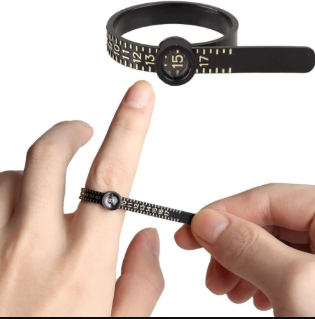
Buying a ring can be exciting, but choosing the correct size is one of the most important parts of the process. A ring that is too tight can feel uncomfortable, while one that is too loose may rotate constantly or slip from the finger. Fortunately, you do not always need to visit a jeweller to get a useful measurement. With a thin strip of paper, non-stretchable string, a pen, and a ruler, you can estimate your ring size at home. Another practical option is to measure the inside diameter of a ring that already fits the intended finger. The important thing is to measure the correct finger and use the sizing chart provided by the jewellery seller because sizing systems can differ between countries and brands.
What Does Ring Size Mean?
Ring size refers to the measurement used to determine how a ring should fit around a particular finger. Depending on the sizing system, it may be represented by a number, letter, or measurement based on the ring’s internal diameter or circumference. In India, numerical ring sizes are commonly used, while US and UK systems use different conventions. This means a number from one sizing system should not automatically be treated as the same number in another system. When shopping online, checking the seller’s own size chart is particularly important. A measurement in millimetres is often the most useful starting point because it gives you a physical measurement that can then be matched to the appropriate chart.
How to Know Your Ring Size Using Paper
One of the simplest answers to how to know your ring size is to measure your finger with a narrow strip of paper. You only need a piece of non-stretchable paper, a pen, and a ruler with millimetre markings. Cut the paper into a thin strip that is long enough to wrap comfortably around the base of your finger. Place it around the finger where the ring will sit and make sure it is snug without pressing tightly into your skin. Mark the exact point where one end of the paper meets the other. Remove the paper, lay it flat, and measure from the beginning of the strip to the marked point. The resulting measurement is approximately the circumference of your finger. You can then compare that measurement with the jewellery brand’s ring-size chart to find the closest available size.
Measuring With String
If paper is not available, a thin piece of non-stretchable string can also be used. The process is similar, but you need to be careful not to stretch the string while wrapping it around your finger. Place the string around the base of the intended finger and bring the ends together without making the loop excessively tight. Mark the point where the ends meet, then straighten the string and measure its length in millimetres. This gives you an approximate circumference measurement. String can be convenient, but paper may be easier to mark and measure consistently because some types of thread or string can stretch. For a better result, repeat the measurement two or three times. If the readings are slightly different, look for the measurement that appears most consistently rather than depending on one attempt.
How to Know Your Ring Size From an Existing Ring
Another reliable home method for how to know your ring size is to use a ring that already fits the intended finger comfortably. This method can be especially helpful when buying another ring for the same finger. Place the existing ring flat on a ruler and measure straight across the inside opening from one inner edge to the opposite inner edge. This is the internal diameter, so do not include the thickness of the metal band. Once you have the diameter in millimetres, compare it with the diameter measurements on the jewellery seller’s size chart. It is important to use a ring that fits the same finger because different fingers can have noticeably different sizes. A ring that fits your middle finger, for example, may not provide an accurate measurement for your ring finger.
Simple Ring Size Reference Chart
Once you have measured your finger circumference or the inside diameter of an existing ring, you can compare the result with a suitable chart. The following figures provide general reference points for commonly used Indian sizes. Exact conversions can vary slightly between charts, so always check the specific sizing guide provided by the jewellery brand before ordering.
| Indian Ring Size | Approx. Inner Diameter | Approx. Circumference |
|---|---|---|
| 8 | 15.3 mm | 48.0 mm |
| 10 | 15.9 mm | 50.0 mm |
| 12 | 16.5 mm | 51.9 mm |
| 14 | 17.3 mm | 54.4 mm |
| 16 | 17.9 mm | 56.3 mm |
| 18 | 18.5 mm | 58.3 mm |
| 20 | 19.2 mm | 60.2 mm |
| 22 | 19.8 mm | 62.1 mm |
| 24 | 20.4 mm | 64.0 mm |
| 26 | 21.0 mm | 65.9 mm |
These measurements are useful for comparison rather than a universal replacement for the seller’s own chart. Different sizing systems use different labels, so a particular Indian size should not automatically be assumed to equal the same number in the US or another system.
Measure the Correct Finger
When learning how to know your ring size, choosing the correct finger is just as important as measuring accurately. Every finger can have a different circumference, and the corresponding finger on the other hand may also differ slightly. If you are purchasing a ring for your right ring finger, measure that exact finger instead of using a measurement taken from your left hand. Similarly, if the ring will be worn on an index or middle finger, measure that specific finger.
The ring’s intended position also matters. A ring normally sits around the base of the finger, but it must still pass over the knuckle comfortably. If your knuckle is noticeably wider than the base of your finger, measuring only the base may produce a size that is difficult to put on or remove. In such cases, consider both the base and knuckle when deciding which size is most comfortable.
Choose the Right Time to Measure
Finger size can change temporarily because of temperature, activity, and other everyday factors. Cold conditions can make fingers feel smaller, while heat or physical activity can cause temporary swelling. For this reason, taking one measurement at one particular moment may not provide the best representation of how a ring will feel throughout the day.
For a more useful measurement, allow your hands to return to a comfortable room temperature before measuring. Repeat the measurement at least two or three times and compare the results. If the measurements remain consistent, you can have greater confidence in the result. This is especially useful when buying a ring online because you may not have an opportunity to try it before purchasing.
Consider the Ring’s Width
The width and design of a ring can influence how comfortable the same size feels. A narrow band may feel different from a wide band even when both have the same nominal size. Wider bands cover more of the finger and can feel tighter, while a narrow band may feel less restrictive.
If you are purchasing a wide or heavily designed ring, do not rely exclusively on a measurement taken from a very narrow existing ring. Check the jewellery brand’s guidance for the particular design. If the ring is expensive, difficult to resize, or has a complicated setting, getting professional sizing advice can be worthwhile. A jeweller can assess both the finger and the ring design before recommending a size.
How to Know Your Ring Size When You Are Between Sizes
Sometimes your measurement will fall between two available ring sizes. This can make how to know your ring size slightly more complicated because there may not be an exact match on the seller’s chart. In many situations, choosing the larger available size can provide a more comfortable fit, particularly when the ring has a wider band. However, the best choice depends on the specific ring, finger shape, and sizing system.
Do not automatically choose a smaller size simply because it appears closer numerically. A ring that is too tight can become uncomfortable when your finger expands during warm weather or normal activity. On the other hand, a ring that is excessively loose may rotate or slip. If your measurement falls between sizes and the ring is valuable or difficult to resize, consider asking the jeweller for specific advice before placing the order.
Common Mistakes When Measuring Ring Size
Several simple mistakes can affect the accuracy of a home measurement. One of the most common is wrapping paper or string too tightly around the finger. This can produce a measurement that is smaller than your actual comfortable ring size. Another mistake is using stretchy thread, which can change the measurement when pulled.
People also sometimes measure the outside of an existing ring rather than the inside. The outside diameter includes the metal band and therefore does not represent the space available for the finger. Another common problem is using a ring that fits a different finger. Because fingers vary in size, this can produce an incorrect result.
Finally, people sometimes measure only once. Repeating the process gives you a chance to identify an inconsistent reading and correct the technique before selecting a size.
How to Know Your Ring Size for an Online Purchase
Online jewellery shopping makes accurate sizing particularly important because you cannot try the ring on before completing the purchase. Before ordering, identify the sizing system used by the seller. Do not assume that a US size, Indian size, UK letter size, and millimetre measurement are interchangeable. Instead, find the brand’s official size chart and compare your measurement with the appropriate column.
If the website provides instructions for measuring an existing ring or your finger, follow those instructions because the available sizes may be specific to that brand. Write down your finger, measurement, and selected size so you do not accidentally use information from another finger or another ring. Taking a few minutes to check these details can reduce the possibility of ordering the wrong size.
Can You Use a Ring Size Calculator?
A ring size calculator can make the conversion process easier after you have measured your finger circumference or an existing ring’s internal diameter. The calculator essentially compares your measurement with established ring-size values and provides a corresponding size. However, the calculator should be treated as a convenience rather than a guarantee.
Different brands may use different sizing charts, and international size labels do not always match perfectly. Therefore, if a calculator gives you a particular size, compare that result with the chart provided by the jewellery seller. If the two results disagree, investigate the sizing system before placing your order. Accurate measurement is more important than simply accepting the first number produced by a calculator.
When Professional Ring Sizing Is Better
Home measurement is convenient, but there are situations where professional sizing is the safer choice. If your fingers have unusually prominent knuckles, your measurement changes significantly between attempts, or you are purchasing an expensive ring, a jeweller can provide a more dependable assessment.
Professional jewellers have specialized sizing tools that can measure fingers and existing rings. They can also consider the design and width of the ring when recommending a size. This can be particularly helpful for engagement rings, wedding bands, custom-made jewellery, and rings that may be difficult or expensive to resize.
If you have already purchased a ring and it feels excessively tight, do not force it over a swollen finger. Likewise, if a ring is so loose that it can easily fall off, consider having the size assessed before wearing it regularly.
Tips for Getting a Comfortable Fit
A good ring should feel secure without causing discomfort. It should pass over the knuckle with reasonable resistance and sit comfortably around the base of the finger. It should not leave deep marks, cause persistent pressure, or feel so loose that it can easily slide off.
After putting the ring on, move your hand normally and check whether the ring remains comfortable. A small amount of movement is normal, but excessive spinning or slipping may indicate that the ring is too large. If removing the ring requires significant force, it may be too tight.
Remember that comfort matters as much as the number printed on the size chart. A technically correct measurement can still feel different depending on the ring’s width, shape, material, and design.
Frequently Asked Questions
Can I measure my ring size at home?
Yes. A narrow strip of paper, non-stretchable string, pen, and ruler can provide a useful estimate. Measuring an existing ring that already fits the intended finger is another practical method.
Is measuring an existing ring accurate?
It can be useful when the ring fits the exact finger you are measuring. Measure the inside diameter rather than the outside diameter and compare it with the jewellery seller’s chart.
Should I measure my finger more than once?
Yes. Repeating the measurement two or three times can help identify inconsistencies and improve confidence in your result.
What should I do if I am between two sizes?
Check the jewellery brand’s specific guidance. In many cases, the larger size is more comfortable, especially for wider bands, but the best choice depends on the ring and your finger.
Does every finger have the same ring size?
No. Different fingers can have different measurements, and the same finger on opposite hands may also differ. Always measure the exact finger for which the ring is intended.
Conclusion
Learning how to know your ring size does not have to be difficult. You can measure your finger using a narrow paper strip or non-stretchable string, or measure the inside diameter of a ring that already fits the intended finger. The most important steps are to measure carefully, repeat the measurement, use millimetres where possible, and compare the result with the correct sizing chart.
Pay attention to the finger being measured, the ring’s width, your knuckle size, and temporary changes caused by temperature or activity. If your measurement falls between sizes or you are purchasing an expensive or difficult-to-resize ring, professional advice can provide additional confidence.
With a careful measurement and the correct sizing chart, how to know your ring size becomes a straightforward process that can make buying jewellery online or in-store much easier.