
Introduction
Knowing the correct ring size is important when buying an engagement ring, wedding ring, fashion ring, or any other piece of jewelry. A ring that is too tight can feel uncomfortable, while one that is too loose may rotate around the finger or slip off. Fortunately, you do not always need to visit a jewelry store to get an approximate measurement. With a few simple household items and careful measuring, you can learn how to know your ring size at home and use that information when shopping for a new ring.
Ring sizes can vary between countries and sizing systems, so understanding your measurement is just as important as taking it. Finger size can also change slightly during the day because of temperature, activity, and other normal factors. For the best result, it is useful to measure more than once and compare the results. This guide explains several practical methods for determining your ring size, along with tips that can help make your measurement more reliable.
Why Knowing Your Ring Size Matters
A properly fitted ring should feel comfortable while remaining secure on the finger. It should slide over the knuckle with gentle resistance but should not feel painfully tight. If a ring is too large, it can move excessively and may eventually fall off. If it is too small, wearing it for extended periods can become uncomfortable.
Understanding how to know your ring size before purchasing jewelry can reduce the possibility of ordering the wrong size. This is particularly useful when shopping online because you may not have an opportunity to try the ring before purchasing it. Having an accurate measurement can also make it easier to compare different rings and understand which size is most likely to fit.
Measure an Existing Ring
One of the easiest ways to estimate your ring size is to use a ring that already fits the intended finger comfortably. Select a ring that sits properly and is similar in width to the new ring you plan to purchase. Place the ring on a flat surface and measure the inside diameter from one inner edge directly across to the opposite inner edge.
The measurement should be taken across the inside of the ring rather than from the outside edges. Even a small difference can affect the resulting size. Once you have the internal diameter in millimeters, you can compare it with a reliable ring-size conversion chart.
This method is particularly convenient because it does not require wrapping anything around your finger. However, it only works well if the existing ring actually fits the same finger correctly.
Use a Paper Strip
Another practical method for learning how to know your ring size involves using a thin strip of paper. Cut a narrow strip that is long enough to wrap comfortably around the base of your finger. Wrap it around the finger without pulling it excessively tight. Mark the point where one end meets the other.
Next, lay the paper flat and measure the distance from its beginning to the marked point in millimeters. This gives you an approximate circumference of your finger. Compare that circumference with a ring-size chart to determine the corresponding size.
The paper should sit naturally around your finger. If you pull it too tightly, the measurement may be smaller than your actual finger size. If it is too loose, the resulting size may be unnecessarily large.
Try the String Method Carefully
A piece of non-stretchable string can also be used for measuring. Wrap the string around the base of the intended finger and mark where the ends meet. Then straighten the string and measure its length using a ruler.
Although this method is convenient, string can sometimes create inaccurate results because it may stretch or move while being wrapped around the finger. Paper is often easier to control because it maintains a more consistent shape.
If you are trying to determine how to know your ring size using string, avoid elastic or stretchy materials. The goal is to measure your natural finger circumference rather than the amount that the material can stretch.
Measure Your Finger at the Right Time
Finger size is not completely constant throughout the day. Temperature, physical activity, and other everyday factors can cause fingers to become slightly larger or smaller. For this reason, taking a measurement only once may not always provide the most dependable result.
For a better estimate, measure your finger when your hands are at a comfortable, normal temperature. Avoid measuring immediately after exposure to very cold or very hot conditions. It can also be helpful to take measurements at different times and compare them.
If you are researching how to know your ring size, consistency is more important than trying to achieve an extremely precise measurement from a single attempt. Several similar measurements can give you greater confidence in the result.
Consider the Finger You Will Wear the Ring On
The fingers on your two hands are not necessarily identical in size. Even the same finger on opposite hands can have a slightly different circumference. Therefore, measuring one hand and purchasing a ring intended for the other may result in an unexpected fit.
Always measure the specific finger on which you plan to wear the ring. If the ring is intended for a particular occasion, consider whether you will wear it alongside another ring because stacking multiple rings can affect how comfortable the fit feels.
This is especially important for engagement and wedding rings, where the intended finger should be measured directly rather than estimated from another finger.
Think About the Ring’s Width
Ring width can influence how a ring feels on your finger. Narrow bands may feel different from wide bands even when both have the same nominal size. Wider rings generally cover more of the finger and can feel tighter than thinner bands.
When determining how to know your ring size, consider the design you intend to purchase. If you are ordering a particularly wide band, you may want professional sizing advice rather than relying entirely on a basic home measurement.
The style of the ring can also influence comfort. Rings with large settings, unusual shapes, or multiple bands may sit differently from a simple narrow band. A measurement provides a starting point, but the design should also be considered.
Understand Different Ring Size Systems
Ring sizes are not represented in exactly the same way around the world. Some countries commonly use numerical sizing systems, while others use letters or different measurement conventions. Because of this, knowing only a number may not be enough when purchasing from an international seller.
Before ordering a ring, determine which sizing system the seller uses. Then convert your measurement using the seller’s or a trusted jewelry sizing chart. Do not assume that a size number has the same meaning everywhere.
If you are learning how to know your ring size for an online purchase, checking the seller’s specific sizing information is especially important. Their chart may provide measurements in millimeters, circumference, diameter, or another format.
Use a Ring Size Chart
After measuring your finger circumference or the inside diameter of an existing ring, the next step is comparing your measurement with a ring-size chart. These charts match physical measurements to standard ring sizes.
When using a chart, make sure you are comparing the correct measurement. A chart based on internal diameter should not be compared directly with a finger circumference measurement. Mixing these two measurements can produce an incorrect result.
If your measurement falls between two sizes, consider the ring’s design and your preferred fit. For an important purchase, professional advice from a jeweler can provide greater confidence.
Common Mistakes to Avoid
Several simple mistakes can make a home ring measurement less accurate. Measuring with a stretched string, pulling paper too tightly, measuring the wrong finger, or using an incorrectly printed sizing guide can all produce misleading results.
Another common mistake is measuring when your fingers are unusually cold or swollen. Temporary changes in finger size can affect the measurement. It is better to measure under normal conditions and repeat the process.
When learning how to know your ring size, avoid rushing. Take the measurement carefully, repeat it, and make sure your ruler is properly aligned. Small errors in circumference can translate into noticeable differences when converted to a ring size.
How to Check Whether a Ring Fits
Once you have a ring, pay attention to how it behaves during normal movement. A properly fitted ring should remain comfortably positioned while allowing reasonable movement of the finger. It should not cause persistent discomfort, numbness, or excessive pressure.
The ring should also pass over the knuckle without requiring excessive force. If it moves too freely or repeatedly feels as though it may fall off, it may be too large. If it becomes difficult to remove or causes significant discomfort, it may be too small.
Learning how to know your ring size is therefore not only about obtaining a number. Understanding how a properly fitted ring feels can help you make a better decision.
Getting Professional Ring Sizing
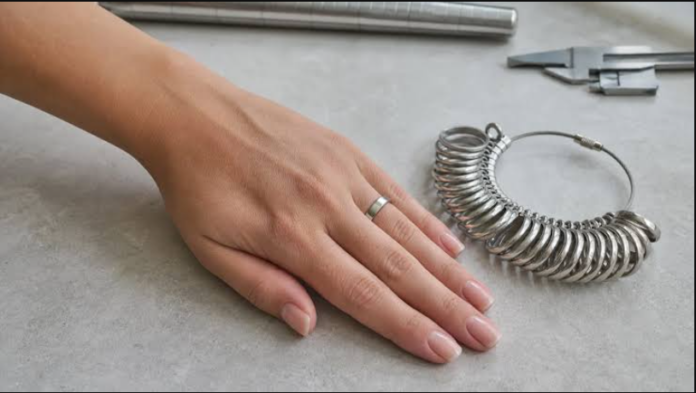
Home measurements are convenient, but professional sizing is the most dependable option when accuracy is particularly important. A jeweler can use specialized ring-sizing tools and can assess the finger and ring style together.
Professional sizing can be especially useful for expensive jewelry, custom-made rings, wedding bands, or rings with unusual designs. If your home measurements produce different results, visiting a jewelry professional can help resolve the uncertainty.
For online purchases, you can still measure at home first and then compare your result with the seller’s sizing information. If the seller provides a printable measuring tool, follow its instructions carefully rather than relying on a generic chart.
Ring Size Tips for Online Shopping
Online shopping makes it possible to access a wide range of jewelry designs, but it also makes accurate sizing more important. Before placing an order, check whether the seller provides a detailed sizing guide and whether sizes can be exchanged or resized.
Keep a record of your finger circumference and, if possible, your inside-diameter measurement from a well-fitting ring. This information can help when comparing products from different sellers.
If you are searching for how to know your ring size because you are planning an online purchase, avoid selecting a size based solely on what someone else wears. Ring size is personal, and even people with similar hand sizes can require different measurements.
What to Do If Your Measurement Is Between Sizes
Sometimes your measurement may fall between two standard ring sizes. This does not necessarily mean that your measurement is wrong. Human fingers do not always correspond perfectly to standardized sizes.
In this situation, consider the ring’s width, material, design, and how you prefer your jewelry to fit. A narrow ring and a wide ring may feel different even when their nominal sizes are identical.
If the ring is valuable or cannot easily be resized, professional advice is worthwhile. A jeweler can evaluate the design and provide guidance about the most appropriate size.
Conclusion
Learning how to know your ring size can be simple when you use a careful measurement method. You can measure an existing ring’s internal diameter, wrap a paper strip around your finger, or use non-stretchable string to estimate your finger circumference. For the most reliable result, measure the exact finger you will use, keep your hand at a normal temperature, repeat the measurement, and compare the result with the appropriate sizing system.
It is also important to remember that ring width and design can influence comfort. Online shoppers should check the seller’s sizing chart and return or exchange policy before ordering. For expensive, custom, or particularly important rings, professional sizing remains the safest choice. With careful preparation and accurate measurements, you can approach your next ring purchase with greater confidence and a much better chance of finding a comfortable fit.