
Introduction
Knowing your blood type can be useful for understanding personal medical information, completing health records, and communicating important information to healthcare professionals. Blood types are determined by specific markers on red blood cells, primarily the ABO and Rh systems. Because these markers are not reliably visible from outside the body, a person’s blood type cannot be accurately identified simply by looking at them or observing ordinary physical characteristics. People searching for how to know your blood type without testing may therefore be wondering whether there are reliable alternatives to taking a new blood-type test. In some situations, an existing medical record, previous laboratory result, blood-donation record, or other documented source may already contain the answer. However, when no trustworthy record exists, laboratory testing remains the dependable way to confirm the blood type.
What Determines Your Blood Type?
Blood type is determined by inherited characteristics involving molecules found on the surface of red blood cells. The best-known classification is the ABO system, which divides blood into A, B, AB, and O groups. The Rh system is another important classification, commonly described as positive or negative.
For example, a person may have blood type A positive, O negative, AB positive, or another ABO/Rh combination. These classifications are based on biological markers rather than visible physical characteristics.
This is important when considering how to know your blood type without testing because there is no reliable external feature that can reveal a person’s complete ABO and Rh classification. Blood type is a laboratory or documented medical fact rather than something that can normally be determined through appearance.
Can You Know Your Blood Type Without a New Test?
Sometimes, yes—but only if a reliable previous record already exists. A person may have had their blood type determined during an earlier medical procedure, blood donation, pregnancy-related care, surgery, hospitalization, or other healthcare encounter.
In such cases, the information may already be documented in a medical record. Finding an existing verified result is different from determining blood type through observation. You are not actually identifying the blood type without testing; instead, you are retrieving a result from testing that occurred previously.
This distinction is particularly important for people researching how to know your blood type without testing. If you already have trustworthy documentation, a new test may not be necessary for general knowledge. For important medical decisions, however, healthcare professionals may still confirm blood type through appropriate procedures.
Check Your Existing Medical Records
One of the easiest ways to find a previously determined blood type is to review your medical records. Hospitals, clinics, laboratories, and healthcare systems may retain laboratory information from previous encounters.
Depending on the healthcare system, blood-group information could appear in laboratory reports, patient portals, hospital records, or other medical documentation. Older paper records may also contain relevant information.
If you find a blood type in a medical record, check whether the document clearly identifies the test or laboratory result. Avoid relying on handwritten notes or unofficial information when accuracy is important.
Existing medical documentation can therefore be a practical answer to how to know your blood type without testing, provided that the information came from a legitimate blood-group determination.
Check Previous Blood Donation Records
Blood donors may have their blood type determined as part of the donation process. If you have donated blood previously, the blood-donation organization may have information about your blood group.
Some donors receive documentation or may be able to access information through the organization responsible for their donation. The availability of records varies depending on the organization and country.
If you have donated blood before, checking your donor records can be worthwhile. However, do not assume your blood type based on another person’s information or a donation card that cannot be verified.
For someone asking how to know your blood type without testing, a previous donation record can be useful because it may provide documented information from an earlier blood-group determination.
Ask Your Healthcare Provider
If you have undergone medical treatment in the past, your doctor or healthcare provider may be able to determine whether your blood type has already been recorded. This is particularly relevant if you have previously had surgery, received certain medical treatments, or undergone procedures where blood-group information was required.
Healthcare professionals can also explain whether an existing result is sufficient for your current situation. In some circumstances, particularly before a transfusion or other significant medical procedure, healthcare providers may perform additional blood-group testing rather than relying only on information supplied by a patient.
This is an important safety principle: knowing your blood type personally is useful, but medical teams follow their own verification procedures when blood compatibility matters.
Can Family Members Tell You Your Blood Type?
Parents may sometimes know their child’s blood type because it was determined previously. Family medical records can also contain this information. However, simply asking a parent or relative does not provide laboratory confirmation.
Genetics can explain how blood types are inherited, but knowing the blood types of parents does not always establish a person’s exact blood type without considering the relevant genetic possibilities. Even when the possibilities appear narrow, assumptions should not replace a confirmed result.
Therefore, family information can provide a clue or help you locate documentation, but it should not be treated as definitive medical evidence.
Can Your Blood Type Be Predicted From Your Parents?
Blood type has a genetic component, so the blood types of biological parents can provide information about possible blood types in their children. The ABO system follows recognizable inheritance patterns, while the Rh system also has genetic influences.
However, genetic prediction can become complicated, and knowing only the commonly stated blood types of parents does not necessarily provide enough information to establish an individual’s exact blood type with certainty.
For this reason, genetic inheritance can be useful for understanding blood-group biology but is not a substitute for a confirmed blood-group result. This distinction is important when researching how to know your blood type without testing.
Can Symptoms Reveal Blood Type?
No reliable set of symptoms can tell you whether you have A, B, AB, or O blood type, or whether you are Rh-positive or Rh-negative. People with different blood types can have the same general health characteristics and experience the same common symptoms.
Headaches, tiredness, appetite, body temperature, blood pressure, skin appearance, and other ordinary physical observations cannot reliably identify ABO or Rh status.
Online claims suggesting that specific personality traits, food preferences, body types, or everyday symptoms reveal blood type should therefore be treated cautiously. These characteristics are not a dependable substitute for medical documentation or blood-group testing.
Can Personality Reveal Your Blood Type?
There are popular cultural beliefs in some countries that associate personality characteristics with particular blood groups. These ideas are sometimes presented as entertainment or cultural traditions.
However, personality characteristics cannot be used as a medically reliable method of determining blood type. A person’s behavior, temperament, interests, or communication style does not establish their ABO or Rh classification.
Therefore, anyone researching how to know your blood type without testing should avoid personality-based methods. They may be interesting from a cultural perspective but cannot provide a dependable medical answer.
Can Blood Type Be Identified by Looking at Your Blood?
Blood can appear visually similar regardless of whether a person has type A, B, AB, or O blood. The relevant blood-group markers are microscopic biological characteristics and are not something that can be reliably identified simply by looking at a blood sample.
Special laboratory procedures use antibodies and other methods to determine whether particular blood-group antigens are present. These procedures provide information that visual inspection cannot provide.
This is why claims that someone can identify blood type from the color, thickness, or appearance of blood are unreliable. A blood sample may look normal while belonging to any of several different blood groups.
Why Blood Type Matters Medically
Blood type becomes especially important when blood transfusion or certain medical procedures are involved. Transfusing incompatible blood can cause serious reactions, which is why healthcare professionals use appropriate compatibility testing and identification procedures.
Blood type can also be relevant during pregnancy because the Rh system can have medical significance in some circumstances. Healthcare providers may therefore check blood-group information as part of appropriate prenatal care.
For these reasons, personal knowledge of your blood type can be useful, but it should never replace professional verification when medical treatment depends on accurate blood-group information.
Is a Home Blood-Type Kit the Same as Not Testing?

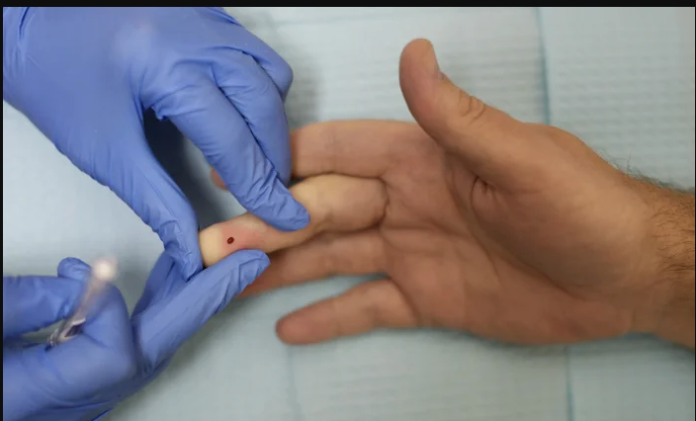
A home blood-type kit still involves testing. It may allow a person to perform a blood-group determination outside a traditional laboratory, but the basic principle remains the same: a sample is being examined to identify blood-group markers.
Therefore, a home kit does not truly answer how to know your blood type without testing. It is better described as an alternative testing method.
If a person uses a home test, following the manufacturer’s instructions carefully is important. For medical procedures where blood compatibility is critical, healthcare professionals should determine the appropriate testing and verification process.
What to Do If You Cannot Find Your Blood Type
If you have searched your medical records, checked previous donation information, and asked your healthcare provider but cannot find a documented blood type, the safest option is to have it determined through an appropriate blood test.
Although this may seem less convenient than finding an answer online, blood-group testing is straightforward and provides information that can be documented for future reference.
Once you receive a confirmed result, you can keep the information with your personal health records. Maintaining accurate medical information can make it easier to provide healthcare professionals with relevant details when needed.
Common Mistakes People Make
One common mistake is assuming that blood type can be identified through physical appearance. Another is believing that personality or dietary preferences reveal a particular blood group.
A different mistake is relying entirely on a relative’s memory. Family members may remember information incorrectly or confuse one person’s blood type with another’s.
People may also assume that a previous blood type result is always sufficient for every future medical procedure. Healthcare professionals may perform additional testing when appropriate because patient safety takes priority over relying solely on self-reported information.
Frequently Asked Questions
Can I know my blood type from my symptoms?
No. Ordinary symptoms do not reliably identify ABO or Rh blood type.
Can my parents tell me my blood type?
They may know it from previous records, but their memory or assumption should not be treated as definitive medical confirmation.
Can I find my blood type in medical records?
Yes. If your blood type was determined during an earlier healthcare encounter, it may appear in your laboratory or medical records.
Can a blood donation record show my blood type?
A previous donation may have included blood-group determination, and the organization may have a record of the result.
Is knowing my blood type enough for a transfusion?
No. Healthcare professionals use appropriate blood typing and compatibility procedures before transfusion. Personal knowledge should not replace clinical verification.
The Most Reliable Approach
The answer to how to know your blood type without testing depends on what “without testing” means. If you mean without taking a new test, you may be able to find a previously documented result in medical records, blood-donation records, or other trustworthy healthcare documentation.
If you mean determining your blood type without any previous test or documented result, there is no reliable shortcut based on appearance, symptoms, personality, family guesses, or visual examination of blood.
Keeping a confirmed blood type in your personal health records can be convenient, but it should always be understood as supporting information rather than a replacement for professional verification during medical care.
Conclusion
Learning how to know your blood type without testing is possible in a limited sense when a trustworthy result already exists in medical records, previous blood-donation information, or other healthcare documentation. These approaches allow you to find an existing result without undergoing another test.
However, there is no reliable way to determine a person’s ABO and Rh blood type from appearance, symptoms, personality, blood color, or other everyday characteristics. Genetic information from parents may sometimes narrow possibilities, but it should not be treated as a confirmed blood type.
If no reliable record exists, appropriate blood-group testing remains the dependable method. When blood compatibility matters medically, healthcare professionals should always follow the required testing and verification procedures rather than relying solely on information found online or remembered by the patient.