

Introduction
Understanding your skin type is an important first step toward creating a skincare routine that suits your individual needs. Many people purchase cleansers, moisturizers, sunscreens, and other products without knowing whether their skin tends to be oily, dry, combination, normal, or sensitive. As a result, a product that works well for one person may feel uncomfortable or ineffective for another. Learning how to know your skin type can make it easier to choose products that support your skin without unnecessarily complicating your routine.
Skin can also change over time because of age, weather, hormones, stress, lifestyle, medications, and environmental conditions. Someone who normally has oily skin may experience dryness during colder months, while combination skin may become more balanced under different conditions. Therefore, identifying skin type is not necessarily a one-time process. Observing how your skin behaves under consistent conditions can provide a more useful picture than relying on a single observation.
What Is Skin Type?
Skin type generally describes how much oil, or sebum, your skin naturally produces and how that oil is distributed across the face. The commonly recognized categories include normal, dry, oily, combination, and sensitive skin. These categories provide a simple way to understand general skin characteristics.
Normal skin typically has a relatively balanced oil and moisture level. Dry skin tends to produce less oil and may feel tight or rough. Oily skin produces more sebum and may appear shiny, particularly around the forehead, nose, and chin. Combination skin usually has oilier areas alongside drier or more balanced areas.
Sensitive skin is slightly different because sensitivity describes how skin reacts rather than simply how much oil it produces. A person can have oily-sensitive, dry-sensitive, or combination-sensitive skin.
How to Know Your Skin Type at Home
If you are wondering how to know your skin type, one simple approach is to start with clean, bare skin. Wash your face using a gentle cleanser and lukewarm water, then gently pat it dry. Avoid applying moisturizer, sunscreen, makeup, or other skincare products immediately afterward.
Wait for approximately 30 minutes to an hour and observe how your skin feels and looks. Pay attention to shine, tightness, dryness, visible oiliness, and how different areas of your face behave.
This simple observation can provide useful clues. However, skin conditions can vary depending on weather, hydration, recent product use, and other factors. Repeating the observation on different days can provide a more reliable impression.
Signs of Normal Skin
Normal skin generally has a balanced appearance and does not tend to be excessively oily or dry. The skin may feel comfortable after cleansing and may have relatively small or less noticeable pores.
People with normal skin can still experience occasional dryness, oiliness, blemishes, or sensitivity. Having normal skin does not mean the skin will never experience problems. Instead, it generally indicates a relatively balanced baseline.
A simple routine with gentle cleansing, moisturizing, and sun protection is often enough to support normal skin. Adding many products simply because they are popular is not necessarily beneficial. The most useful routine is one that maintains comfort and supports the skin barrier.
Signs of Dry Skin
Dry skin generally produces less natural oil than oily skin. After cleansing, people with dry skin may experience tightness, roughness, flaking, or discomfort. Fine lines may also appear more noticeable when the skin lacks sufficient moisture.
Cold weather, dry air, hot showers, harsh cleansers, and over-exfoliation can make dryness more noticeable. However, persistent or severe dryness may sometimes be related to an underlying skin condition rather than ordinary skin type.
If you have dry skin, a gentle cleanser and a suitable moisturizer can help support the skin barrier. Avoiding unnecessarily harsh products and excessive washing may also help reduce discomfort.
Signs of Oily Skin
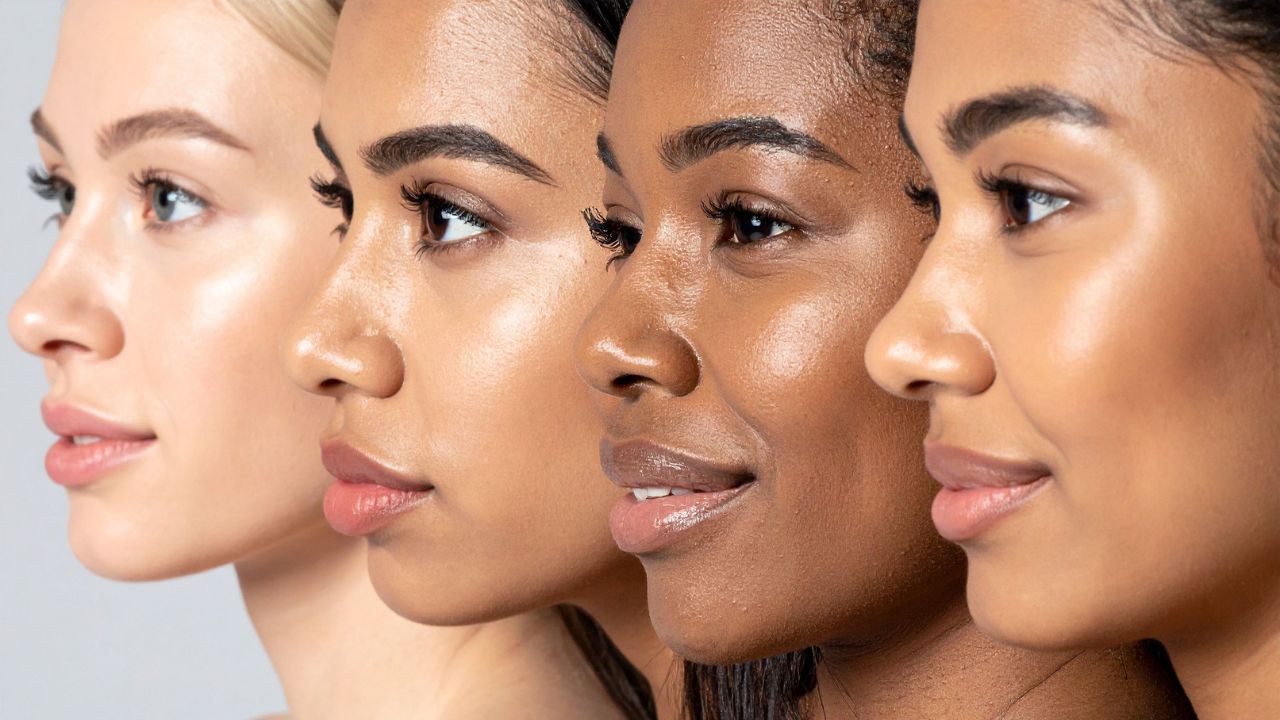
Oily skin produces more sebum, which can cause a noticeable shine on the face. The forehead, nose, and chin may become particularly oily, although some people experience oiliness across most of the face.
People with oily skin may also notice enlarged-looking pores, frequent clogged pores, or blemishes. However, having oily skin does not automatically mean someone will develop acne. Acne can have several contributing factors, including hormones, genetics, inflammation, and other influences.
When caring for oily skin, it is generally better to avoid trying to remove every trace of oil. Over-cleansing can irritate the skin and may make the face feel uncomfortable. A balanced routine can help maintain cleanliness without excessive stripping.
Signs of Combination Skin
Combination skin has characteristics of more than one skin type. A common pattern is increased oiliness around the forehead, nose, and chin, while the cheeks remain normal or dry.
People with combination skin may find skincare challenging because one product can feel appropriate for one area but unsuitable for another. A heavy moisturizer may feel comfortable on dry cheeks but excessive around the nose.
A flexible approach can be useful. Lightweight products may work across most of the face, while additional moisture can be applied to areas that need it. Observing individual areas rather than treating the entire face identically can make a routine more comfortable.
What Does Sensitive Skin Mean?
Sensitive skin can react more easily to skincare products, environmental conditions, or physical factors. Symptoms may include stinging, burning, redness, itching, or discomfort after using certain products.
Sensitivity is not necessarily a separate oil-production category. A person can have dry and sensitive skin or oily and sensitive skin. This is why understanding both skin type and skin reactivity is important.
If your skin frequently becomes painful, severely irritated, swollen, or persistently red, it may be useful to consult a qualified healthcare professional or dermatologist rather than trying to manage the issue entirely through cosmetic products.
The Bare-Face Observation Test
Another practical method for learning how to know your skin type is the bare-face observation test. After cleansing, leave the skin without skincare products for a period of time and observe its behavior.
If the entire face becomes noticeably shiny, the skin may be oily. If it feels tight and appears flaky or rough, it may be dry. If the forehead and nose become oily while the cheeks remain dry or comfortable, combination skin may be a possibility.
If the skin remains comfortable without obvious excessive oiliness or dryness, it may have relatively balanced characteristics. The test is not a medical diagnosis, but it can provide a useful starting point for choosing a basic skincare routine.
Using Blotting Paper to Check Oiliness
Blotting paper can provide another simple way to observe oil distribution. After allowing the skin to remain product-free for some time, gently press blotting paper against different facial areas.
If the paper picks up significant oil from several areas, the skin may be oily. If oil is concentrated around the forehead, nose, and chin but limited on the cheeks, combination skin may be more likely.
Very little oil across the face may indicate dry or less oily skin. However, this method should not be treated as a definitive test because oil production changes throughout the day and can be affected by environmental conditions.
Skin Type Can Change Over Time
Skin type is not always permanent. Age can influence oil production, and hormonal changes can affect the way skin behaves. Seasonal changes can also make the skin feel significantly different.
During hot and humid weather, some people notice increased oiliness or sweating. During cold or dry weather, the same skin may feel tighter or drier. Travel, stress, changes in routine, and environmental exposure can also influence skin appearance.
For this reason, how to know your skin type should be viewed as an ongoing observation rather than a permanent label. The goal is to understand what your skin currently needs.
Difference Between Skin Type and Skin Condition
Skin type and skin condition are not the same thing. Skin type describes relatively stable characteristics such as oil production, while skin conditions can develop or change over time.
Acne, dehydration, redness, irritation, hyperpigmentation, and sensitivity can occur alongside different skin types. For example, oily skin can still become dehydrated, and dry skin can still develop acne.
Understanding this difference can prevent people from assuming that every skin concern can be solved simply by changing products designed for a particular skin type. Some concerns may require professional evaluation.
How Weather Affects Skin
Environmental conditions can influence how skin behaves. Humid weather can make oily skin feel more noticeable, while cold and dry air can increase feelings of tightness and dryness.
Sun exposure can also affect the skin. Regular exposure without adequate protection can contribute to premature skin aging and other concerns. Daily sun protection is therefore an important part of most skincare routines regardless of whether the skin is oily, dry, combination, or normal.
Because weather changes throughout the year, it can be reasonable to adjust product textures while keeping the basic routine consistent.
Choosing Products After Identifying Your Skin Type
Once you understand how to know your skin type, choosing skincare products can become easier. Dry skin may generally feel more comfortable with moisturizing products, while oily skin may prefer lightweight textures. Combination skin may benefit from adapting products to different areas.
Sensitive skin usually requires additional caution. Introducing too many new products simultaneously can make it difficult to identify which product caused irritation.
Regardless of skin type, gentle cleansing, appropriate moisturizing, and sun protection form a simple foundation. Product choices should also consider individual concerns, allergies, sensitivity, and personal preferences.
Common Mistakes When Identifying Skin Type
One common mistake is judging skin type immediately after washing the face. Cleansing temporarily changes the skin’s surface and can make it feel tighter than it normally does.
Another mistake is confusing dehydration with dry skin. Dehydrated skin lacks water, while dry skin generally refers to lower oil production. A person with oily skin can still experience dehydration.
People also sometimes assume that visible pores automatically mean oily skin or that occasional dryness means they have permanently dry skin. Skin type should be assessed by observing consistent patterns rather than one temporary change.
When to Consult a Dermatologist
Home observations can help identify general skin characteristics, but they cannot diagnose medical skin conditions. If you experience persistent irritation, severe acne, unexplained rashes, significant redness, painful dryness, or other concerning symptoms, professional advice may be appropriate.
A dermatologist can assess the skin directly and determine whether a particular condition is contributing to the symptoms. This can be especially useful when common skincare products do not improve the problem or repeatedly cause irritation.
Professional guidance is also useful when someone is considering treatments for persistent pigmentation, acne scarring, severe acne, or other specific concerns.
Building a Simple Skincare Routine
After determining how to know your skin type, it is not necessary to immediately purchase a large collection of products. A simple routine can be easier to maintain and evaluate.
A basic routine commonly includes cleansing, moisturizing, and sun protection. Additional products can be introduced gradually when there is a specific reason to use them.
Introducing one new product at a time can make it easier to observe how the skin responds. If irritation occurs, identifying the potential cause is simpler when several new products have not been introduced simultaneously.
Conclusion
Learning how to know your skin type can help you understand whether your skin tends to be normal, dry, oily, combination, or sensitive. Simple observations after cleansing can provide useful clues about oil production, tightness, shine, and how different areas of the face behave.
It is important to remember that skin type can change because of age, weather, hormones, environment, and lifestyle. Skin type is also different from temporary conditions such as dehydration, irritation, acne, or redness. A person may therefore need to reassess their skin from time to time rather than following one permanent label.
The best skincare routine is not necessarily the longest one. Understanding your skin, choosing appropriate basic products, introducing changes gradually, and seeking professional advice for persistent concerns can provide a practical foundation for healthier-looking skin.