
Introduction
Astrology has been used for centuries as a way to interpret celestial patterns and connect them with human experiences, personality descriptions, and traditional beliefs. One of the simplest concepts in Western astrology is the zodiac sign, which is usually determined by a person’s date of birth. People often search for how to know your zodiac sign because they want to understand which of the twelve zodiac signs is associated with their birthday. The process is generally straightforward when using the Western tropical zodiac: compare your birth date with the traditional date range for each sign. However, astrology includes several different systems, and the dates or interpretations can vary between Western and Vedic traditions. Your Sun sign is only one part of a complete astrological chart, which may also include the Moon sign and Ascendant. Understanding these differences can help you explore zodiac concepts without confusing one astrology system with another.
What Is a Zodiac Sign?
A zodiac sign is one of twelve divisions used in traditional Western astrology. The zodiac is associated with the apparent path of the Sun across the sky over the course of a year, known as the ecliptic. Each sign covers a particular section of this traditional zodiac.
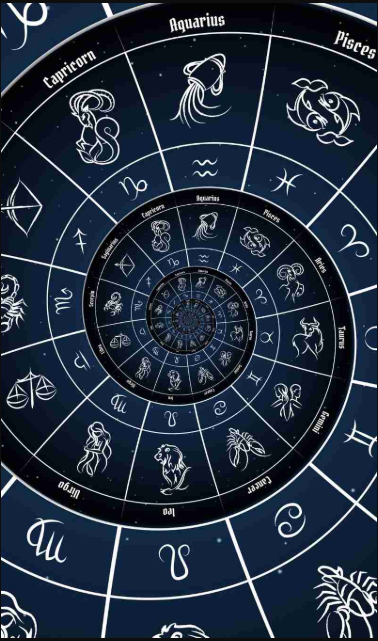
The twelve signs are Aries, Taurus, Gemini, Cancer, Leo, Virgo, Libra, Scorpio, Sagittarius, Capricorn, Aquarius, and Pisces. Each sign is traditionally associated with a particular period of the year. When people casually ask about someone’s “zodiac sign,” they usually mean their Sun sign, which is determined primarily by their birth date in Western astrology.
How to Know Your Zodiac Sign Using Your Birth Date
The easiest way to understand how to know your zodiac sign is to identify your birth date and compare it with the traditional Western zodiac date ranges. If your birthday falls within the range associated with Aries, for example, Aries is generally considered your Sun sign. The same process applies to the other eleven signs.
The commonly used Western tropical zodiac dates are approximate because exact boundary dates can vary slightly depending on the year and the time of birth. People born close to a transition between two signs may therefore need their exact birth time and location to determine the Sun’s position accurately. For most birthdays well within a sign’s traditional range, however, the basic date method is sufficient.
The 12 Zodiac Signs and Their Traditional Dates
The twelve Western zodiac signs are commonly associated with the following approximate date ranges:
| Zodiac Sign | Approximate Dates |
|---|---|
| Aries | March 21 – April 19 |
| Taurus | April 20 – May 20 |
| Gemini | May 21 – June 20 |
| Cancer | June 21 – July 22 |
| Leo | July 23 – August 22 |
| Virgo | August 23 – September 22 |
| Libra | September 23 – October 22 |
| Scorpio | October 23 – November 21 |
| Sagittarius | November 22 – December 21 |
| Capricorn | December 22 – January 19 |
| Aquarius | January 20 – February 18 |
| Pisces | February 19 – March 20 |
These dates are commonly used for Western astrology, but they should be treated as general ranges rather than universal astronomical boundaries.
Aries, Taurus and Gemini
Aries is traditionally the first sign of the Western zodiac and is associated with birthdays generally falling from late March to mid-April. Taurus follows Aries and is generally associated with late April through much of May. Gemini traditionally covers the period from late May through approximately June 20.
In traditional astrology, each of these signs is associated with particular qualities and an element. Aries is categorized as a fire sign, Taurus as an earth sign, and Gemini as an air sign. These descriptions are part of astrological tradition rather than scientifically established personality measurements. People who want to explore zodiac signs can use these categories as part of understanding how astrology organizes its symbolic system.
Cancer, Leo and Virgo
Cancer is traditionally associated with birthdays from approximately late June to late July. Leo generally follows from late July through August, while Virgo typically covers late August through September. These three signs are traditionally connected with water, fire, and earth elements respectively.
People researching how to know your zodiac sign may also encounter personality descriptions associated with each sign. Cancer is often symbolically connected with emotional sensitivity, Leo with self-expression, and Virgo with organization and attention to detail. These are traditional astrological interpretations, not scientifically proven descriptions of individuals. A person’s actual personality is influenced by many factors, including environment, experiences, relationships, and individual development.
Libra, Scorpio and Sagittarius
Libra is generally associated with late September and most of October, Scorpio with late October and much of November, and Sagittarius with late November through December. In traditional Western astrology, Libra is an air sign, Scorpio is a water sign, and Sagittarius is a fire sign.
Astrology gives each sign symbolic characteristics. Libra is often associated with balance and relationships, Scorpio with intensity and transformation, and Sagittarius with exploration and philosophical interests. These interpretations can vary among astrologers and traditions. Anyone exploring zodiac information should understand that these descriptions are part of an interpretive system rather than established scientific personality classifications.
Capricorn, Aquarius and Pisces
Capricorn is generally associated with late December through much of January. Aquarius follows from approximately late January through February, while Pisces generally completes the zodiac cycle from late February through March.
Traditionally, Capricorn is an earth sign, Aquarius an air sign, and Pisces a water sign. Astrological interpretations often associate Capricorn with discipline, Aquarius with independence or innovation, and Pisces with imagination or sensitivity. Again, these descriptions represent traditional astrology rather than scientifically demonstrated personality traits. The zodiac can be explored as a cultural and symbolic system while keeping the distinction between tradition and scientific evidence clear.
Why Your Birth Time Can Matter
For most people, a birth date is enough to identify the general Sun-sign range. However, birth time becomes more important when someone is born near the boundary between two zodiac signs. The Sun does not enter a new sign at exactly the same clock time every year, so a person born on a transition date may require more precise information.
Birth time is also important for calculating other parts of an astrological chart. The Ascendant, commonly called the rising sign, depends strongly on the exact time and location of birth. This is why a complete birth chart generally requires the date, time, and location of birth rather than the date alone.
Western Zodiac vs. Vedic Astrology

Another important point when learning how to know your zodiac sign is understanding that Western and Vedic astrology use different approaches. Western astrology commonly uses the tropical zodiac, which is linked to the seasonal cycle. Vedic astrology, often called Jyotisha, generally uses a sidereal zodiac that accounts for the astronomical shift known as precession.
As a result, a person’s sign can sometimes differ between Western and Vedic systems. Neither should automatically be treated as the “correct” version because they are different astrological traditions with different calculation frameworks. When discussing your zodiac sign, it is useful to specify which system you are using.
Sun Sign, Moon Sign and Rising Sign
The Sun sign is only one part of astrology. A birth chart can also include a Moon sign and an Ascendant or rising sign. The Sun sign is traditionally associated with the position of the Sun at birth, while the Moon sign relates to the Moon’s position. The Ascendant refers to the sign rising on the eastern horizon at the time and location of birth.
These three placements are sometimes described together as the “Big Three” in popular astrology. Someone may therefore have one Sun sign, another Moon sign, and a different rising sign. This is one reason two people with the same Sun sign may receive different astrological interpretations.
What Does Being on a Zodiac Cusp Mean?
People born close to the transition between two zodiac signs are sometimes described as being “on the cusp.” In popular astrology, this phrase is used for birthdays close to the point where the Sun moves from one sign into another.
However, in astrological calculations, the Sun is in one zodiac sign at a specific moment rather than permanently belonging to both. This means that people born near a boundary may need their exact birth time and location to determine the Sun sign accurately. A simple birthday chart may not always provide enough information for these borderline cases.
How to Find Your Zodiac Sign Accurately
If your birthday falls well inside a traditional zodiac date range, identifying your Sun sign is usually straightforward. If your birthday is near a sign change, more precise information can be useful. Your exact birth date, birth time, and birthplace can help determine the Sun’s position at the moment of birth.
When using astrology calculators or charts, it is also important to check which zodiac system they use. A Western tropical chart and a Vedic sidereal chart can produce different sign placements. Knowing the system being used prevents unnecessary confusion when comparing results.
Why People Want to Know Their Zodiac Sign
People explore zodiac signs for many different reasons. Some are interested in astrology as a cultural tradition, while others enjoy reading personality descriptions or discussing compatibility with friends and family. Zodiac signs also appear frequently in entertainment, social media, magazines, and popular culture.
For many people, astrology provides a framework for reflection and conversation. However, it is useful to remember that astrological descriptions should not be treated as definitive statements about someone’s character, future, relationships, or abilities. Personal experiences and individual choices are much more complex than a single zodiac sign.
Using Your Zodiac Sign for Personal Reflection
After learning how to know your zodiac sign, some people use the information as a starting point for personal reflection. For example, they may read traditional descriptions and consider which characteristics feel relevant to their experiences. Others may simply enjoy learning about the history and symbolism associated with their sign.
A balanced approach is to treat astrology as a cultural or reflective practice rather than a scientifically validated method for predicting personality or future events. A zodiac sign can provide an interesting topic for discussion without needing to define an entire person.
Common Mistakes When Identifying a Zodiac Sign
One common mistake is assuming that zodiac dates are exactly identical in every source. Another is confusing Western tropical astrology with Vedic sidereal astrology. People may also assume that the Sun sign represents the entire birth chart, when astrology itself includes many other planetary placements.
Another mistake is believing that being born on a particular date automatically determines every aspect of personality. Zodiac signs are symbolic categories, and individuals are far more complex than a single classification. Understanding these limitations can make learning about astrology more informative and enjoyable.
Conclusion
Learning how to know your zodiac sign is usually simple when using your birth date and the traditional Western zodiac date ranges. The twelve signs range from Aries through Pisces, with each sign covering an approximate period of the year. However, people born near sign boundaries may need their exact birth time and location for a more precise calculation. It is also important to distinguish Western tropical astrology from Vedic sidereal astrology because the two systems can produce different results. Your Sun sign represents only one part of an astrological chart, alongside placements such as the Moon sign and rising sign. Whether you explore astrology for cultural interest, entertainment, or personal reflection, understanding the basic system can help you interpret zodiac information more clearly while recognizing that astrological traditions are different from scientifically established methods.