
Introduction
In Vedic astrology, a nakshatra is one of the most important elements used to understand a person’s birth chart. It is commonly known as a birth star and is associated with the position of the Moon at the time of birth. According to traditional Indian astrology, nakshatras are used to interpret personality characteristics, emotional tendencies, relationships, and different stages of life. Many people also consult their birth star when selecting auspicious dates for ceremonies, naming a child, or planning religious activities.
If you are wondering how to know your nakshatra, the process is relatively simple when you have your birth details available. Your date of birth, exact birth time, and birthplace can help determine the Moon’s position in the zodiac at the moment you were born. This information is then used to identify your janma nakshatra, or birth star. Understanding this concept can help you explore the traditional principles of Vedic astrology and learn more about the structure of a birth chart.
What Is a Nakshatra in Vedic Astrology?
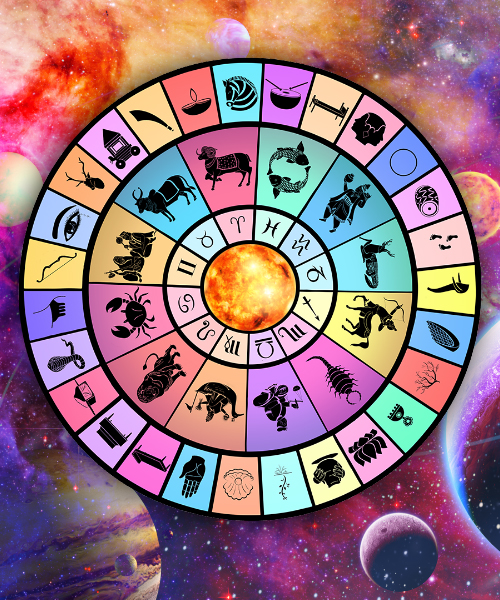
A nakshatra is a section of the zodiac used in the traditional system of Indian astrology. Vedic astrology divides the zodiac into 27 principal nakshatras, each covering approximately 13 degrees and 20 minutes of celestial longitude. These divisions provide a more detailed way of interpreting the Moon’s position than simply identifying its zodiac sign.
Each nakshatra has a traditional name, symbol, ruling planetary influence, and associated mythology. For example, Ashwini is traditionally associated with beginnings and swift action, while Rohini is connected with growth, beauty, and creativity. These meanings come from astrological traditions rather than scientifically established personality assessments.
The Moon moves through the nakshatras as it travels across the zodiac. Because the Moon changes its apparent position relatively quickly, a person’s birth time can be important when determining the correct nakshatra. This is why birth details are generally required for a more accurate calculation.
How to Know Your Nakshatra Using Your Birth Details
The easiest way to determine your birth star is to use a Vedic birth chart calculator or consult an astrologer who can calculate the Moon’s position for your birth moment. You will usually need three essential details: your date of birth, time of birth, and place of birth.
First, enter your complete date of birth into the calculator. Next, provide your birth time as accurately as possible, including whether it was in the morning or evening. Finally, select your birthplace so the calculation can account for the appropriate local time and geographical information. The calculator can then determine the Moon’s celestial longitude and identify the corresponding nakshatra.
When researching how to know your nakshatra, make sure the calculator uses the Vedic or sidereal zodiac rather than a Western tropical astrology system. You should also check whether the calculation follows a clearly stated ayanamsha, such as Lahiri, because different calculation conventions can occasionally produce differences near a nakshatra boundary.
Why Your Exact Birth Time Matters
Your birth time can influence the accuracy of your nakshatra calculation because the Moon continues moving through the zodiac throughout the day. Although the Moon typically spends around a day in one nakshatra, it does not remain in the same one for precisely 24 hours. Consequently, someone born near the transition between two nakshatras may receive a different result if the birth time is entered incorrectly.
For example, imagine that the Moon changes from one nakshatra to another during the early morning. A person born before that transition may have one birth star, while someone born later that morning may have the next one. Their birth dates could be identical, but their nakshatras could differ because the Moon’s position changed.
If you do not know your exact birth time, check your birth certificate, hospital records, or family documents. If the time remains unavailable, an astrologer may be able to discuss alternative approaches, but the result may be uncertain. It is better to acknowledge that uncertainty than to assume that a date-only calculation is always accurate.
Understanding the 27 Nakshatras
The traditional system recognizes 27 principal nakshatras, beginning with Ashwini and ending with Revati. Each one occupies a specific portion of the sidereal zodiac and is associated with particular symbols, deities, and interpretive themes.
The 27 nakshatras are Ashwini, Bharani, Krittika, Rohini, Mrigashira, Ardra, Punarvasu, Pushya, Ashlesha, Magha, Purva Phalguni, Uttara Phalguni, Hasta, Chitra, Swati, Vishakha, Anuradha, Jyeshtha, Mula, Purva Ashadha, Uttara Ashadha, Shravana, Dhanishta, Shatabhisha, Purva Bhadrapada, Uttara Bhadrapada, and Revati.
Each nakshatra is further divided into four quarters known as padas. There are therefore 108 padas across the 27 principal nakshatras. In traditional astrology, the specific pada is sometimes used for more detailed interpretations, including certain naming customs and birth chart calculations.
Learning the names of the nakshatras can be helpful, but memorizing the entire list is not necessary to find your birth star. A reliable calculation based on your birth details is generally the most practical starting point.
What Is the Difference Between a Rashi and a Nakshatra?
People sometimes confuse their rashi with their nakshatra because both are based on the Moon’s position in traditional Vedic astrology. However, they describe different divisions of the zodiac.
A rashi refers to one of the 12 zodiac signs used in the sidereal system. Each sign covers 30 degrees of the zodiac. A nakshatra, by comparison, covers approximately 13 degrees and 20 minutes. Since the nakshatra divisions are smaller, they provide a more specific description of the Moon’s location.
One rashi can contain portions of two or three nakshatras. For example, the sidereal sign Aries includes Ashwini, Bharani, and part of Krittika. Therefore, two people with the same Moon sign may have different birth stars.
When learning how to know your nakshatra, it is important to look specifically for the janma nakshatra or Moon nakshatra in your birth chart. Do not assume that your Sun sign or Moon sign alone provides the complete answer.
How to Find Your Nakshatra Without a Birth Chart
If you do not have a prepared birth chart, you can still explore your nakshatra using an online Vedic astrology calculator. Many calculators provide a result after you enter your date, time, and location of birth. Some also display your Moon sign, nakshatra pada, and other traditional astrological details.
Before accepting the result, check that your information has been entered correctly. Confirm the date format, local birth time, and birthplace. If you were born in another country or in a location that observes daylight-saving time, accurate time-zone conversion may be particularly important.
You can also request a janma nakshatra calculation from a knowledgeable Vedic astrologer. This may be useful if your birth time is uncertain, your birth occurred near a nakshatra transition, or different calculators provide different results.
Remember that a calculator is only as reliable as its input data and calculation method. If you receive conflicting answers, compare the ayanamsha and other settings used by the calculators instead of choosing a result simply because it appears more favorable.
Traditional Significance of Your Birth Nakshatra
In Vedic astrology, the janma nakshatra is traditionally considered significant because it represents the lunar constellation occupied by the Moon at birth. Astrologers may interpret it alongside the Moon sign, planetary positions, houses, and other elements of a birth chart.
Some traditions associate nakshatras with personality tendencies, emotional patterns, strengths, challenges, and interpersonal relationships. Certain families also use nakshatra-based naming conventions for newborns. In these customs, specific syllables associated with a nakshatra pada may guide the selection of a child’s name.
Nakshatras are also used in the traditional practice of muhurta, which involves selecting auspicious times for events such as weddings, housewarming ceremonies, and religious observances. In compatibility assessments, astrologers may compare the nakshatras of two individuals as one part of a broader matching process.
These practices are culturally important to many people, but astrological interpretations should not be treated as scientifically proven predictions. Your birth star does not determine your entire personality, future, career, or relationship outcomes. Personal choices, circumstances, education, and experiences remain important aspects of everyday life.
What Is a Nakshatra Pada?
Every nakshatra is divided into four equal sections called padas. Each pada covers 3 degrees and 20 minutes of celestial longitude. The pada provides a more precise indication of the Moon’s position within a particular nakshatra.
In traditional interpretations, the four padas are sometimes connected with different characteristics and naming syllables. For example, families following Hindu naming traditions may consult the child’s nakshatra and pada when choosing a name. The exact syllable associations depend on the traditional system being followed.
Your pada is especially relevant if you are comparing detailed birth chart reports. Two people born under the same nakshatra may have different padas, resulting in different interpretations within the astrological framework.
However, the pada should not be confused with the nakshatra itself. The nakshatra identifies the larger lunar division, while the pada identifies one of its four smaller sections. A birth chart calculator may display both results, allowing you to understand your astrological information more clearly.
Common Mistakes to Avoid When Checking Your Nakshatra
One common mistake is entering an approximate birth time without recognizing that the Moon may have been close to a nakshatra boundary. Even when the date is correct, an inaccurate time can sometimes lead to an incorrect result. Using documented birth information whenever possible can reduce this risk.
Another mistake is using a Western zodiac calculator that reports a tropical zodiac position when you specifically want a Vedic nakshatra calculation. Nakshatras are traditionally determined using the sidereal zodiac, so it is important to choose a calculator designed for that purpose.
People may also confuse their Sun sign, Moon sign, and birth star. These are related but distinct astrological concepts. If you want to identify your janma nakshatra, check the section of your birth chart that specifically lists the Moon’s nakshatra.
Finally, avoid making major personal or financial decisions solely on the basis of astrological predictions. You can explore nakshatras as part of your cultural, spiritual, or personal interests while also relying on practical information, careful reasoning, and professional advice where appropriate.
Can You Know Your Nakshatra by Date of Birth Only?
It is sometimes possible to estimate your nakshatra using only your date of birth, particularly when the Moon remains within the same nakshatra throughout the relevant period. However, this method is not always dependable because the Moon can change nakshatras during a calendar day.
If you were born close to a transition, the exact time and location become especially important. A date-only calculator may display multiple possible nakshatras or provide a result based on an assumed time. Such an answer should be treated as provisional until your birth details are verified.
If your birth time is unknown, begin by finding the approximate time from family records or official documents. You can then compare possible results across the range of likely birth times. If the Moon changes nakshatras during that range, you may not be able to identify one definitive birth star without additional information.
This approach is more responsible than assuming that every person born on the same date shares the same nakshatra. Birth details allow for a more precise calculation and help avoid unnecessary confusion.
Conclusion
Finding your birth star is a straightforward process when you have accurate birth information. By using your date of birth, exact birth time, and birthplace in a Vedic astrology calculator, you can identify the Moon’s nakshatra at the moment of your birth. You can then explore its traditional symbolism, ruling planet, pada, and cultural significance.
Understanding how to know your nakshatra also means recognizing the difference between a nakshatra and a rashi, checking the calculation method, and verifying your birth details before accepting a result. If your birth time is uncertain or your result falls near a boundary, seek a careful calculation rather than relying on assumptions.
Ultimately, nakshatras offer a window into India’s longstanding astrological traditions. Whether you are researching your birth star out of curiosity, exploring family customs, or learning about Vedic astrology, approaching the subject with an open mind and a clear understanding of its traditional nature can make the experience more meaningful.