
Introduction
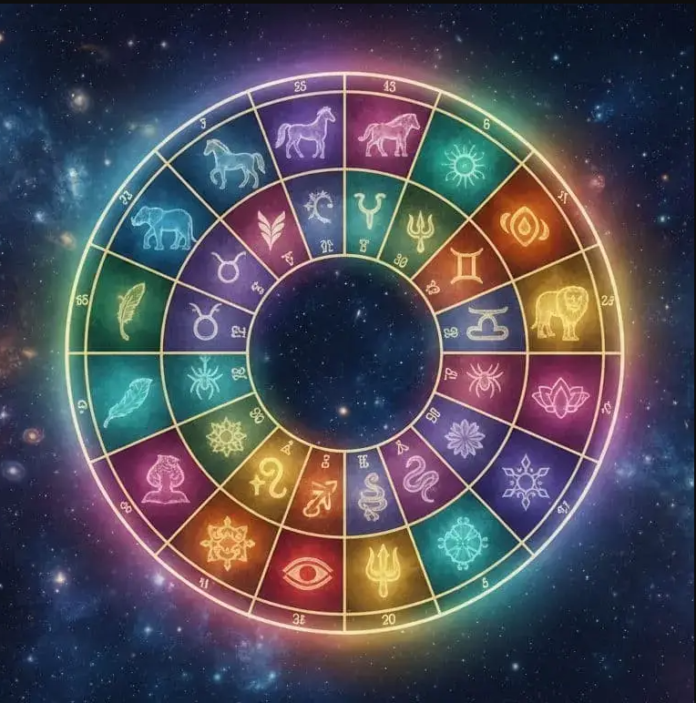
In Vedic astrology, a nakshatra is an important part of understanding the Moon’s position at the time of birth. The zodiac is divided into 27 nakshatras, each covering a specific portion of the sky. Your birth nakshatra is determined mainly by the exact position of the Moon when you were born. It is often used alongside the Moon sign, ascendant, and planetary positions to interpret personality traits, emotional tendencies, habits, relationships, and different areas of life. Many people become curious about how to know your nakshatra because they want to understand their traditional Vedic astrology profile more clearly. Finding it does not require complicated calculations if accurate birth information is available. Your date of birth, exact birth time, and birthplace provide the basic information needed to determine the Moon’s position and identify the corresponding nakshatra.
What Is a Nakshatra?
A nakshatra is a lunar constellation or division used in traditional Indian astrology. The 360-degree zodiac is divided into 27 sections, with each nakshatra covering 13 degrees and 20 minutes. These divisions are connected with the movement of the Moon because the Moon travels through the zodiac relatively quickly. Every nakshatra has its own symbolism, ruling planet, deity, characteristics, and four smaller divisions known as padas. The 27 nakshatras begin with Ashwini and end with Revati. In Vedic astrology, the birth nakshatra is considered especially significant because the Moon represents the mind, emotions, instincts, and inner responses. Therefore, identifying your nakshatra can provide another traditional framework for exploring your astrological personality and emotional patterns.
Why Your Birth Nakshatra Matters
The birth nakshatra is commonly used in several areas of Vedic astrology. Astrologers may consider it while examining personality characteristics, emotional behavior, compatibility, naming traditions, planetary periods, and certain auspicious activities. It can also be used to identify the starting point of the Vimshottari Dasha system, an important planetary-period method in Vedic astrology. People may also compare nakshatras when studying traditional marriage compatibility. However, nakshatra interpretation should be understood as an astrological tradition rather than a scientifically established method of predicting personality or future events. If you are exploring how to know your nakshatra, it is useful to first understand that the calculation depends on astronomical positions at the moment of birth, while the meanings assigned to those positions come from the Vedic astrology tradition.
What Information Do You Need?
The three most useful pieces of information are your birth date, birth time, and birthplace. The date establishes the general position of the Moon, while the exact time helps determine its position more precisely. The birthplace is also important because astronomical calculations use geographical coordinates and local time. Even a difference of a few hours can sometimes change the Moon’s nakshatra, particularly when the Moon is close to the boundary between two nakshatras. For this reason, using an approximate birth time may produce an uncertain result. When investigating how to know your nakshatra, try to obtain your birth information from a reliable birth certificate, hospital record, or family record whenever possible. The more accurate the information, the more reliable the calculated nakshatra will be.
How to Know Your Nakshatra From Birth Details
The easiest approach is to use your complete birth details in a Vedic astrology calculation. Enter your date of birth, exact time of birth, and place of birth into a suitable birth-chart calculator that follows the sidereal zodiac system commonly used in Vedic astrology. The calculation determines where the Moon was located at your birth. It then matches the Moon’s longitude with one of the 27 nakshatra divisions. The result generally displays your nakshatra and may also show its pada, ruling planet, and associated deity. This makes the process much easier than manually calculating planetary positions. If you are learning how to know your nakshatra, remember that the key factor is the Moon’s sidereal position rather than simply your Western zodiac sign.
The 27 Nakshatras
The traditional 27 nakshatras are Ashwini, Bharani, Krittika, Rohini, Mrigashira, Ardra, Punarvasu, Pushya, Ashlesha, Magha, Purva Phalguni, Uttara Phalguni, Hasta, Chitra, Swati, Vishakha, Anuradha, Jyeshtha, Mula, Purva Ashadha, Uttara Ashadha, Shravana, Dhanishtha, Shatabhisha, Purva Bhadrapada, Uttara Bhadrapada, and Revati. Each has distinctive traditional associations and is ruled by a particular planet. The nakshatras are distributed throughout the zodiac rather than being associated with only one zodiac sign. Several nakshatras therefore extend across portions of two signs. This is one reason simply knowing your Sun sign is not enough to determine your birth nakshatra. The Moon’s precise position needs to be calculated.
Understanding the Nakshatra Pada
Every nakshatra is divided into four padas, or quarters. Each pada covers 3 degrees and 20 minutes. Once the Moon’s exact position is calculated, it is possible to determine not only the nakshatra but also the specific pada. This provides a more detailed level of traditional astrological interpretation. Two people may have the same nakshatra but different padas, depending on the precise degree of the Moon at their respective birth times. Astrologers may consider the pada when interpreting characteristics, compatibility, and other elements of a birth chart. If you are researching how to know your nakshatra, it is worth recording the pada along with the nakshatra name because many detailed Vedic astrology readings use both pieces of information.
Nakshatra and Moon Sign Are Different
A common source of confusion is the difference between the Moon sign and the nakshatra. Both are determined using the Moon’s position at birth, but they describe different divisions of the zodiac. The zodiac signs divide the 360-degree circle into 12 sections of 30 degrees each, while the nakshatra system divides it into 27 sections of 13 degrees and 20 minutes. As a result, one Moon sign can contain parts of multiple nakshatras. Knowing your Moon sign therefore does not automatically tell you your nakshatra. If someone tells you only their zodiac or Moon sign, additional information is required to identify their birth star accurately. Understanding this distinction makes it easier to follow the calculation process and interpret the final result correctly.
Can Your Nakshatra Change?
Your birth nakshatra does not change because it is based on the Moon’s position at the moment you were born. The Moon itself moves through different nakshatras approximately every day, but your natal nakshatra remains associated with your birth chart. This is why the exact birth time is important. If the Moon changes from one nakshatra to another around the time of birth, even a relatively small difference in recorded birth time may affect the result. In uncertain cases, an astrologer may examine the available birth information and use traditional birth-time rectification methods, although such methods are interpretive rather than scientifically validated. For practical purposes, the best starting point is always an accurately recorded birth time.
Common Mistakes When Finding Your Nakshatra
One common mistake is using the wrong birth time. People sometimes remember an approximate time such as morning or evening, but a more precise time can be important when the Moon is close to a nakshatra boundary. Another mistake is confusing a Western zodiac sign with a Vedic nakshatra. Different astrological systems can use different zodiac frameworks, so the calculation method matters. Entering the wrong birthplace or selecting the wrong time zone can also affect the chart. Some people additionally assume that the first result they see online must be correct without checking whether the calculation uses the sidereal system appropriate to their intended Vedic astrology reading. When learning how to know your nakshatra, checking these basic details can help prevent avoidable errors.
What Can You Learn From Your Nakshatra?
Traditional astrology assigns various qualities and symbols to each nakshatra. Depending on the nakshatra, interpretations may discuss emotional tendencies, communication patterns, motivations, interests, strengths, and challenges. The ruling planet is also considered important because it connects the nakshatra with a broader planetary symbolism. Some traditions associate particular nakshatras with specific activities, deities, animals, symbols, and qualities. However, a nakshatra should not be treated as a complete description of a person. Vedic astrology generally considers the entire birth chart, including the ascendant, Moon sign, planets, houses, aspects, and planetary periods. Therefore, discovering your nakshatra is best viewed as one part of a broader traditional astrological framework rather than a standalone personality test.
Nakshatra and Traditional Naming Practices
In many Indian traditions, nakshatras have also been associated with particular syllables used for naming children. The four padas of a nakshatra can correspond to different starting sounds. Families following these traditions may use the baby’s birth nakshatra and pada as one factor when selecting a name. The practice varies between communities and families, so it is not universal. If you know the birth nakshatra but do not know the pada, the naming information may not be sufficiently specific for traditions that use pada-based syllables. This is another reason why accurate birth time can be valuable when exploring how to know your nakshatra and its traditional applications.
Nakshatra in Compatibility Analysis
Nakshatras are frequently discussed in traditional Vedic marriage compatibility systems. One well-known approach compares the nakshatras and Moon signs of two individuals through several compatibility factors. The purpose is to evaluate traditional indicators related to temperament, emotional connection, family life, and other areas considered important in marriage astrology. Different astrologers and traditions may apply different rules, so results can vary. Compatibility should not be reduced to a single nakshatra score, especially when a complete birth chart is available for examination. Modern relationships also depend on communication, values, trust, respect, financial expectations, and shared goals. Astrology can be considered a cultural or spiritual practice, but it should not replace practical relationship judgment.
Frequently Asked Questions
Is a Nakshatra the Same as a Zodiac Sign?
No. A zodiac sign and a nakshatra are different divisions of the sky used in Vedic astrology. There are 12 zodiac signs and 27 nakshatras. The nakshatra is determined from the Moon’s precise position, while the zodiac sign represents a broader 30-degree section.
Can I Find My Nakshatra Without Knowing My Birth Time?
It may be difficult to determine it accurately without a birth time. If the Moon remained within the same nakshatra throughout the relevant day, an approximate calculation may still produce the same result. However, if the Moon was near a boundary, the result can be uncertain.
Which Planet Rules My Nakshatra?
Each of the 27 nakshatras has a traditional planetary ruler. The sequence of rulers follows a repeating nine-planet pattern used in Vedic astrology. Once your nakshatra is identified, its ruling planet can be determined from the traditional nakshatra system.
Why Is the Moon Important in Nakshatra Calculation?
The Moon is important because the birth nakshatra is determined by the Moon’s position at the time of birth. In Vedic astrology, the Moon is also associated with the mind, emotions, perceptions, and instinctive responses, making its placement particularly significant.
Is Nakshatra Scientifically Proven?
Nakshatras are part of an ancient astrological tradition. The astronomical position of the Moon can be calculated scientifically, but interpretations connecting nakshatras with personality or future events are not established as scientific facts. They are best understood within their cultural and astrological context.
Conclusion
Learning how to know your nakshatra is relatively straightforward when you have accurate birth information. Your date, exact birth time, and birthplace can be used to calculate the Moon’s sidereal position and identify one of the 27 traditional nakshatras. You can then explore its pada, ruling planet, symbolism, and traditional interpretations. The nakshatra is only one component of a complete Vedic astrology chart, so deeper interpretations generally consider other planetary positions as well. Whether you approach astrology as a cultural tradition, spiritual practice, or personal-interest subject, knowing your birth nakshatra can provide an interesting way to explore ancient Indian astrological concepts and their continuing relevance in modern life.