

Introduction
English spelling can sometimes be confusing, especially when two words look almost identical but only one is accepted as correct. One common example is the confusion between “received” and “recieved.” Many people make this spelling mistake while writing emails, preparing documents, completing school assignments, or communicating through digital platforms. Although both versions may look familiar, there is only one correct spelling in standard English.
Understanding the difference between these spellings can improve everyday communication and help writers avoid unnecessary grammatical errors. The correct form is received, which is the past tense and past participle of the verb receive. The incorrect form, recieved, is a common spelling mistake that occurs because people sometimes forget the familiar English spelling rule involving the letters I and E.
Learning the correct spelling does not require complicated grammar knowledge. By understanding the basic rule, exploring practical examples, and practising regularly, anyone can become more confident in using the word correctly.
Which Spelling Is Correct: Received or Recieved?
The correct spelling is received. The alternative spelling, recieved, is incorrect and should not be used in formal or informal English writing. Although the two versions contain the same letters, their arrangement is different, which makes only one acceptable according to standard English spelling conventions.
The word received comes from the verb receive, which means to get, accept, or be given something. When an individual receives a message, package, invitation, payment, or piece of information, the word describes the action of obtaining it. When discussing something that happened in the past, the verb changes to received.
For example, someone might write, “I received your email yesterday.” This sentence explains that the person got an email at an earlier time. Remembering this simple example can make it easier to distinguish the correct spelling whenever the question arises.
Understanding the Meaning of Received
The word received has several uses in everyday communication. Its primary meaning is to obtain or accept something from another person or source. It can describe physical objects, digital messages, information, services, invitations, or different forms of communication.
For example, a customer may receive a delivery, an employee may receive a salary, and a student may receive a certificate after completing an educational programme. In each situation, the word communicates that something has been obtained.
It can also describe how people respond to information, ideas, or opinions. For instance, a new proposal might be well received by a team, meaning that the team responded positively to it. Similarly, a particular film may be received negatively by critics if they do not appreciate its quality or presentation.
Understanding these different meanings helps writers use the word naturally in various situations. It is especially useful in professional communication, academic writing, and everyday conversations.
Why Do People Write Recieved Instead of Received?
There are several reasons why people frequently make this spelling mistake. One major reason is the pronunciation of the word. When people speak English, the pronunciation does not always make the correct letter arrangement obvious. As a result, they may write the letters in the order that seems natural to them.
Another reason is the commonly taught spelling rule involving I and E. Many learners remember the phrase “I before E, except after C” but forget that receive follows the exception. Because the letter C appears before the vowel combination, the correct spelling is receive, not recieve.
Typing quickly on mobile phones and computers can also contribute to spelling errors. People may accidentally switch the positions of two letters without noticing the mistake.
Regular reading, proofreading, and practising common vocabulary can help reduce these errors. Recognising the correct version visually is another effective way to develop stronger spelling habits.
The I Before E Rule Explained
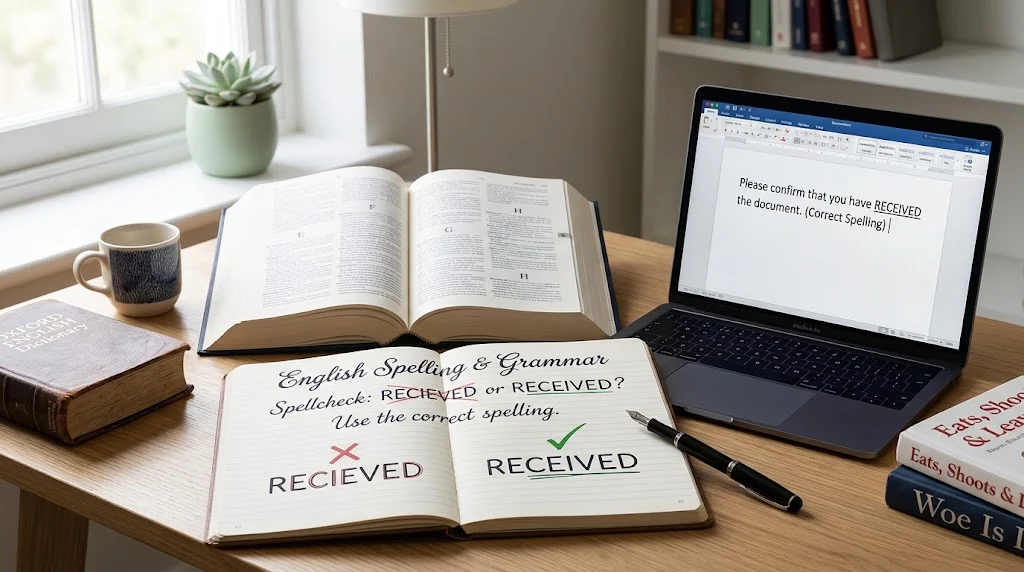
The I-before-E rule is one of the familiar spelling guidelines taught to English learners. It generally suggests that I comes before E in certain words, except when the combination follows the letter C. Words such as believe, achieve, and field follow the usual pattern, while receive and ceiling demonstrate the exception.
However, English contains many exceptions, so this rule should not be treated as completely universal. It is better to learn common word patterns through examples and regular practice.
The word receive follows the C-before-E-I pattern. When the suffix D is added to form its past tense, the spelling becomes received. The original letter arrangement remains unchanged.
Understanding this pattern provides a simple explanation for why the correct spelling contains E before I after C. Once learners recognise this structure, they are less likely to repeat the same mistake in future writing.
Received in Everyday Communication
The word received is commonly used in everyday conversations and written communication. People use it when confirming that they have obtained something or acknowledging information shared by another person.
In professional environments, employees frequently use it to confirm that they have received reports, instructions, invoices, or important documents. For example, a person might write, “I received the updated file and will review it shortly.” This communicates the information clearly without requiring additional explanation.
In personal conversations, the word can describe receiving a birthday present, invitation, message, or phone call. Students may use it when discussing examination results, certificates, or educational materials.
Digital communication has made this word even more common. Email confirmations, online orders, banking notifications, and messaging applications frequently involve the concept of receiving information. Knowing the correct spelling helps people communicate more professionally across these different situations.
Examples of Received in Sentences
Practical examples are among the easiest ways to remember correct spelling. Reading complete sentences allows learners to understand how a word works within different grammatical structures.
Here are some examples:
-
I received your message this morning.
-
She received an invitation to the wedding.
-
We received the documents before the meeting.
-
The company received several applications for the position.
-
He received a beautiful gift on his birthday.
-
The students received their certificates after graduation.
-
I have received your payment successfully.
-
The customer received the package yesterday.
-
Our team received positive feedback from the manager.
-
They received important information about the project.
Each example demonstrates the correct spelling and shows how the word can be used in different situations. Practising these sentences can help improve spelling accuracy and build confidence in written English.
Received vs Receive: Understanding the Difference
Although received and receive come from the same verb, they are used in different grammatical situations. Receive is the base form of the verb, while received is its simple past tense and past participle.
Receive is generally used when discussing an action in the present or future. For example, “I receive several emails every day” describes a regular activity. Similarly, “You will receive your confirmation tomorrow” refers to something expected in the future.
Received is used when the action has already happened. For example, “I received your confirmation yesterday” describes a completed event.
The past participle is also used with helping verbs. A sentence such as “She has received the information” uses received to describe an action that has been completed.
Learning this grammatical distinction makes it easier to select the appropriate form while writing sentences, emails, reports, and other documents.
Common Spelling Mistakes to Avoid
Spelling mistakes are a natural part of learning a language, but understanding frequently confused words can help prevent repeated errors. The confusion between received and recieved is particularly common because the two versions look almost identical.
One important habit is to avoid relying entirely on pronunciation. English words do not always follow predictable sound patterns, so spelling should also be checked through familiar word structures.
Another useful approach is to proofread written content before sending it. A quick review can identify incorrect spellings, missing letters, and other small errors that might affect the quality of communication.
Writers can also use dictionary applications and built-in spelling checkers to identify mistakes. However, understanding why a particular spelling is correct is more valuable than depending only on automatic corrections.
Developing these habits gradually improves vocabulary, writing accuracy, and confidence in professional and personal communication.
How to Remember the Correct Spelling Easily
Remembering the correct spelling becomes easier when learners connect it with a familiar pattern. One simple technique is to remember the base word receive before adding the letter D.
Another technique is to practise writing the word several times in meaningful sentences instead of memorising individual letters without context. For example, writing “I received your email” regularly can help the correct arrangement become familiar.
Reading English books, newspapers, blogs, and educational articles also exposes learners to correct spelling patterns. The more frequently a person sees a word written correctly, the easier it becomes to recognise it.
Learners can also create small vocabulary lists containing commonly confused words. Reviewing these lists occasionally helps strengthen spelling knowledge and reduces repeated mistakes.
Most importantly, do not feel discouraged by occasional spelling errors. Consistent practice and attention to detail can make English writing more accurate over time.
Importance of Correct Spelling in Professional Writing
Correct spelling plays an important role in professional communication. Whether someone is preparing a business email, writing a report, submitting an application, or communicating with customers, accurate language creates a positive impression.
A simple spelling error may not change the intended meaning, but repeated mistakes can make written communication appear less professional. Readers may also become distracted by incorrect words instead of focusing on the information being shared.
Using received correctly is particularly important in situations involving payments, orders, documents, and official confirmations. For example, a message stating that a payment has been received provides clear information to the recipient.
Professional writing does not require complicated vocabulary. Clear sentences, correct grammar, appropriate punctuation, and accurate spelling are often enough to communicate ideas effectively.
Developing good spelling habits can therefore benefit students, employees, business owners, content writers, and anyone who regularly communicates in English.
Conclusion
English spelling can sometimes create confusion, particularly when two similar-looking words have different levels of correctness. However, understanding basic spelling patterns makes these situations easier to handle.
Between received and recieved, the correct spelling is always received in standard English. It is the past tense and past participle of receive and is commonly used when describing something that has been obtained, accepted, or delivered.
Remembering the C-before-E-I pattern, practising example sentences, and proofreading written content can help prevent this common mistake. Whether you are writing a professional email, completing an assignment, or communicating with friends, using the correct spelling makes your message clearer and more reliable.
With regular reading and writing practice, recognising and correctly using received will become a natural part of your everyday English vocabulary.