

Introduction
Digital communication has changed the way people interact with one another. Whether someone is chatting with friends, sending messages to family members, or communicating through social media, abbreviations have become an important part of everyday conversations. Short forms help people express their thoughts quickly without typing complete sentences. One popular abbreviation frequently seen in text messages and online conversations is OFC.
If you have received a message containing this abbreviation and wondered what it means, you are not alone. Many people encounter internet slang that may initially seem confusing, especially when different generations use different expressions. Understanding these short forms makes online communication easier and helps prevent misunderstandings. The abbreviation OFC is particularly common because it can communicate agreement, confirmation, and reassurance in just three letters.
What Does OFC Mean in Text?
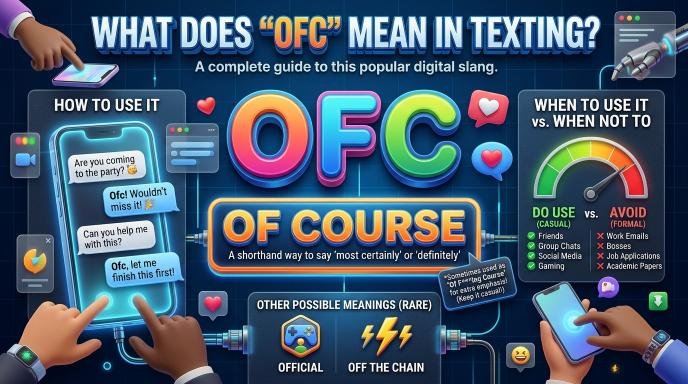
The abbreviation OFC stands for “Of Course.” It is commonly used in text messages, social media conversations, online discussions, and instant messaging platforms. People generally use it when they want to agree with something, confirm a request, or show that an answer is obvious.
For example, imagine that your friend asks, “Can you help me with my homework?” You might respond with “OFC!” This simple reply communicates that you are happy to help. Instead of writing the complete phrase, you use a shorter version that saves time and keeps the conversation casual.
The expression is generally friendly and positive. However, its meaning can sometimes depend on the surrounding conversation, punctuation, and relationship between the people communicating. Understanding the context is therefore important when interpreting online messages.
Why Do People Use OFC in Text Messages?
People prefer short abbreviations because they make digital communication faster and more convenient. When someone is having several conversations simultaneously, typing complete sentences for every response can feel unnecessary. Short expressions provide an easy way to communicate without losing the basic meaning.
Another reason for its popularity is that modern messaging platforms encourage informal communication. Friends and family members often prefer relaxed language instead of formal sentences. Using abbreviations makes conversations feel natural, especially when people already understand one another’s communication styles.
There are several common reasons people use this expression:
-
Quick agreement: It allows someone to agree with a request immediately.
-
Friendly communication: It creates a relaxed and conversational tone.
-
Convenience: It reduces typing effort in everyday conversations.
-
Confirmation: It communicates that something is acceptable or understood.
-
Casual expression: It helps people maintain an informal communication style.
Because of these advantages, OFC has become a familiar expression in online conversations.
How OFC Is Used in Everyday Conversations
The meaning of an abbreviation becomes easier to understand when you see it in real situations. People use this expression in different ways depending on the topic and the relationship between the individuals involved.
For instance, a friend might ask whether you are attending a birthday party. Responding with “OFC, I will be there!” shows enthusiasm and confirms your attendance. Similarly, when someone asks whether they can call you later, replying “OFC” indicates that you are comfortable with the suggestion.
It can also appear in conversations involving simple questions. If somebody asks, “Do you remember our school days?” a response such as “OFC, those were unforgettable!” communicates familiarity and excitement.
These examples demonstrate that the expression is not limited to one particular situation. It works in different casual conversations where agreement, confirmation, or reassurance is needed.
What Does OFC Mean on Social Media?
Social media platforms have made internet slang more popular than ever. Users regularly communicate through comments, direct messages, captions, and short replies. Abbreviations help them express their thoughts quickly while keeping interactions simple.
On platforms such as Instagram, Snapchat, Facebook, TikTok, and X, people frequently use short expressions when responding to friends or participating in discussions. The same abbreviation can appear in a comment, private message, or group conversation.
For example, someone might comment “OFC!” under a post when agreeing with another person’s opinion. A user might also respond to a story with “OFC, that looks amazing!” to show excitement or appreciation.
Although the meaning remains the same, the emotional tone can change depending on the situation. An enthusiastic message with an exclamation mark may sound more excited, while a simple response may feel neutral.
Difference Between OFC and Other Popular Text Abbreviations
Internet communication includes many abbreviations that look similar but serve different purposes. Understanding their differences can help you choose the right expression during conversations.
| Abbreviation | Full Form | Meaning |
|---|---|---|
| OFC | Of Course | Agreement or confirmation |
| LOL | Laughing Out Loud | Expressing amusement |
| BRB | Be Right Back | Temporarily leaving |
| BTW | By The Way | Introducing additional information |
| IDK | I Don’t Know | Expressing uncertainty |
| IMO | In My Opinion | Sharing a personal opinion |
| TBH | To Be Honest | Expressing honesty |
| NVM | Never Mind | Cancelling or dismissing something |
These abbreviations are useful in different communication situations. While some express emotions, others provide information or indicate agreement.
Can OFC Sound Rude or Sarcastic?
Although the expression usually communicates agreement, it does not always sound friendly. Its interpretation depends on the context, the relationship between the people, and the way the message is written.
For example, replying “OFC!” to a friend’s invitation usually sounds positive. However, responding with “OFC…” after someone asks an obvious question might sound impatient or sarcastic.
Tone is especially important in digital communication because text messages do not naturally include facial expressions, voice changes, or body language. A short response can therefore be interpreted differently by different people.
If you want to avoid misunderstandings, consider adding a few extra words to your message. Instead of replying with only the abbreviation, you could write “OFC, happy to help!” or “Of course, that sounds great!” These responses make your intentions clearer and create a warmer impression.
When Should You Use OFC?
This abbreviation is suitable for informal conversations where people are comfortable using internet slang. It works particularly well when chatting with friends, classmates, relatives, or familiar online contacts.
However, it may not always be appropriate in professional communication. When writing business emails, formal applications, academic messages, or official documents, using the complete phrase “Of course” generally creates a more professional impression.
For example, if a colleague asks whether you can attend a scheduled meeting, writing “Of course, I will be available” is more suitable than sending only “OFC.”
The important thing is to understand your audience. Informal abbreviations can make personal conversations easier, but complete sentences are often better when clarity and professionalism matter.
Is OFC Appropriate for All Age Groups?
There is no specific age requirement for understanding or using internet abbreviations. Teenagers, young adults, and older internet users can all encounter these expressions through messaging platforms and online communities.
Younger users may use abbreviations more frequently because they often communicate through short messages and social media. However, people of different age groups also adopt common internet expressions when they become familiar with them.
Understanding OFC does not require advanced technical knowledge. Anyone who regularly uses digital communication can learn its meaning and recognize how it appears in different conversations.
As online language continues to develop, learning commonly used abbreviations can help people communicate more comfortably across different digital platforms.
Tips for Understanding Internet Slang
Internet slang changes regularly, and new abbreviations appear as online communication develops. Learning every expression may not be necessary, but understanding frequently used terms can make digital interactions easier.
Here are some useful suggestions:
Understand the context: Read the complete conversation before interpreting an abbreviation.
Learn common expressions: Become familiar with frequently used terms such as LOL, BRB, BTW, and OFC.
Consider the relationship: A message from a close friend may have a different tone from one sent by a professional contact.
Ask when confused: If you do not understand an abbreviation, asking the sender is perfectly acceptable.
Avoid unnecessary slang: Use simple and clear language when communicating in formal situations.
These habits can improve communication and reduce confusion when interacting with people online.
Conclusion

Understanding internet abbreviations has become an important part of modern digital communication. OFC is one of the simplest and most commonly recognized expressions used in everyday text messages. It stands for “Of Course” and generally communicates agreement, confirmation, or a positive response to someone’s question or request.
From private conversations to social media comments, this abbreviation helps people communicate quickly and naturally. However, its tone can sometimes depend on punctuation and context, so understanding the complete conversation is important.
Whether you are chatting with friends, responding to an invitation, or confirming a request, knowing what OFC means can make online communication easier. By learning common internet expressions and using them appropriately, anyone can become more confident when communicating in today’s digital world.