
Introduction
Vedic astrology is an ancient system that studies the positions of celestial bodies at the time of a person’s birth. It is widely followed in India and several other parts of the world to understand personality traits, emotional tendencies, life patterns, and traditional astrological influences. One of the most important concepts in this system is the nakshatra, also known as a lunar mansion or birth star. Unlike zodiac signs, which divide the zodiac into twelve sections, nakshatras divide it into twenty-seven sections based on the Moon’s position.
Many people want to understand their birth star but do not know where to begin. Learning how to know your nakshatra is relatively simple when you have accurate birth information. Your date of birth, exact birth time, and birthplace are the three essential details used to calculate it. Understanding this information can help you explore traditional Vedic astrology and learn how nakshatras are connected with different aspects of life.
What Is a Nakshatra in Vedic Astrology?
A nakshatra is one of the twenty-seven divisions of the zodiac used in traditional Hindu astrology. Each nakshatra covers approximately 13 degrees and 20 minutes of the zodiac. Together, these divisions create a complete circle of 360 degrees. The Moon travels through these sections during its monthly journey around Earth, spending approximately one day in each nakshatra.
In Vedic astrology, the Moon represents the mind, emotions, feelings, and mental tendencies. Therefore, the nakshatra occupied by the Moon at the moment of birth is considered particularly significant. It is commonly called the Janma Nakshatra or birth star. Astrologers use this information alongside the person’s Moon sign, ascendant, and planetary positions to interpret a birth chart.
How to Know Your Nakshatra Using Birth Details
The easiest way to discover your birth star is to use an online Vedic astrology calculator or consult an experienced astrologer. Before calculating, collect your accurate birth information. These details help determine the Moon’s exact position at the time you were born.
You generally need three important details:
-
Date of birth: The complete day, month, and year you were born.
-
Time of birth: Your birth time, preferably taken from an official birth record.
-
Place of birth: The city or location where you were born.
After entering these details into a Vedic astrology calculator, the system calculates your birth chart and identifies the nakshatra occupied by the Moon. It may also display your Moon sign, nakshatra pada, planetary positions, and other astrological information.
Step-by-Step Process to Find Your Birth Star
Finding your birth star does not require advanced knowledge of astrology. You can follow a few simple steps to obtain the result and understand the information provided by the calculator.
Step 1: Collect Your Birth Information
Start by finding your correct date, time, and place of birth. Accuracy is especially important because the Moon moves relatively quickly through the zodiac. Even a difference of a few hours can sometimes change the nakshatra, particularly when the Moon is close to the boundary between two nakshatras.
Step 2: Choose a Vedic Astrology Calculator
Look for an astrology calculator that specifically provides a Vedic birth chart or Janma Nakshatra calculation. Make sure it allows you to enter the birth location and time zone correctly.
Step 3: Enter Your Details
Provide your birth date, exact time, and birthplace. Check that the calculator has selected the correct location and local time zone before submitting the information.
Step 4: Check Your Results
Once the calculation is complete, look for the section labelled Janma Nakshatra, Birth Star, or Moon Nakshatra. The result will generally include the name of your nakshatra and its pada.
Step 5: Understand Your Nakshatra
After discovering your birth star, explore its traditional ruling planet, symbolism, characteristics, and associated pada. These details provide a broader understanding of how nakshatras are interpreted in Vedic astrology.
The 27 Nakshatras in Vedic Astrology

Traditional Vedic astrology recognises twenty-seven primary nakshatras. Each has a unique name, symbol, ruling planet, and traditional interpretation.
Here is the complete list:
| No. | Nakshatra | Traditional Ruling Planet |
|---|---|---|
| 1 | Ashwini | Ketu |
| 2 | Bharani | Venus |
| 3 | Krittika | Sun |
| 4 | Rohini | Moon |
| 5 | Mrigashira | Mars |
| 6 | Ardra | Rahu |
| 7 | Punarvasu | Jupiter |
| 8 | Pushya | Saturn |
| 9 | Ashlesha | Mercury |
| 10 | Magha | Ketu |
| 11 | Purva Phalguni | Venus |
| 12 | Uttara Phalguni | Sun |
| 13 | Hasta | Moon |
| 14 | Chitra | Mars |
| 15 | Swati | Rahu |
| 16 | Vishakha | Jupiter |
| 17 | Anuradha | Saturn |
| 18 | Jyeshtha | Mercury |
| 19 | Mula | Ketu |
| 20 | Purva Ashadha | Venus |
| 21 | Uttara Ashadha | Sun |
| 22 | Shravana | Moon |
| 23 | Dhanishta | Mars |
| 24 | Shatabhisha | Rahu |
| 25 | Purva Bhadrapada | Jupiter |
| 26 | Uttara Bhadrapada | Saturn |
| 27 | Revati | Mercury |
Each nakshatra has four padas, or quarters. These smaller divisions provide additional details in traditional astrological interpretations.
What Is Nakshatra Pada and Why Is It Important?
Every nakshatra is divided into four equal parts called padas. Since a complete nakshatra covers 13 degrees and 20 minutes, each pada covers 3 degrees and 20 minutes. This means that the twenty-seven nakshatras collectively contain 108 padas.
In Vedic astrology, the pada is considered an additional layer of information for understanding a person’s birth chart. It is traditionally associated with personality tendencies, expression, and certain naming conventions. The pada can also help astrologers make more detailed interpretations of the Moon’s position.
For example, two people may have the same birth nakshatra but different padas. Their traditional astrological interpretations may therefore include some differences. This is why checking both the nakshatra and its pada can be useful when exploring your birth chart.
Difference Between Nakshatra and Zodiac Sign
Many beginners confuse their zodiac sign with their nakshatra because both are calculated using the positions of celestial bodies. However, they represent different divisions in Vedic astrology.
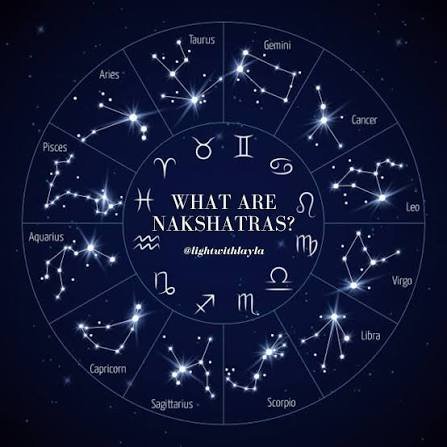
The zodiac contains twelve rashis, including Aries, Taurus, Gemini, Cancer, Leo, and the remaining signs. Each rashi covers 30 degrees of the zodiac. In comparison, the twenty-seven nakshatras divide the same zodiac into smaller sections of approximately 13 degrees and 20 minutes each.
Your Moon sign is determined by the zodiac sign occupied by the Moon at birth, while your Janma Nakshatra identifies the specific lunar mansion occupied by the Moon. As a result, several nakshatras fall within each zodiac sign. Understanding this difference makes it easier to interpret a traditional Vedic birth chart.
Why Is Your Janma Nakshatra Important?
In traditional Hindu astrology, the birth star is used for several astrological and cultural purposes. It is often considered an important part of understanding an individual’s birth chart and is studied alongside planetary positions and other astrological factors.
One common application is kundli matching. Families and astrologers may consider the nakshatras of two individuals when evaluating traditional marriage compatibility. Different matching systems examine factors such as emotional compatibility, temperament, and other astrological combinations.
Nakshatras are also used in determining auspicious timings, known as muhurat. Certain traditional calculations consider the Moon’s position when selecting dates for ceremonies, celebrations, and religious activities. Additionally, birth stars are sometimes used in naming practices, with specific syllables associated with different padas.
These practices are part of cultural and astrological traditions rather than scientifically established methods of predicting life outcomes.
How Does Your Nakshatra Influence Personality?
According to Vedic astrology, every nakshatra has its own symbolic qualities and traditional characteristics. These interpretations are often connected with the nakshatra’s ruling planet, deity, symbol, and position in the zodiac.
For example, Ashwini is traditionally associated with speed, initiative, and healing, while Rohini is connected with creativity, beauty, and growth. Pushya is often associated with nourishment, discipline, and support, whereas Swati is traditionally linked with independence, flexibility, and movement.
However, these descriptions should not be treated as fixed personality definitions. Human behaviour develops through many influences, including upbringing, education, experiences, environment, and individual choices. Astrology offers a traditional framework for reflection, but it cannot scientifically determine someone’s complete personality.
Can You Find Your Nakshatra Without Knowing Your Birth Time?
Knowing your exact birth time makes calculating your nakshatra much easier. However, people who do not have access to their birth time may still have some options.
One approach is to check family records, hospital documents, or official birth certificates. Sometimes relatives may also remember an approximate birth time. If the Moon remained in the same nakshatra throughout the possible birth-time window, an astrologer may be able to identify the likely birth star without an exact time.
However, if the Moon changed nakshatras during that period, the result may remain uncertain. In such situations, an accurate calculation requires a narrower birth-time estimate. Some astrologers also use a traditional method called birth-time rectification, although its interpretations are not scientifically verified.
Common Mistakes to Avoid When Finding Your Nakshatra
Although calculating a birth star is straightforward, a few common mistakes can produce incorrect results. One of the biggest mistakes is entering an approximate birth time when the Moon is near a nakshatra boundary. Another is selecting the wrong birthplace or ignoring the local time zone.
People sometimes use Western astrology calculators instead of Vedic astrology tools. These systems may use different zodiac conventions, which can produce different results. For traditional Janma Nakshatra calculations, it is important to use a calculator that clearly identifies its Vedic astrology settings and ayanamsa.
You should also avoid relying on random social media posts or general zodiac descriptions. A proper birth chart calculation is more useful than guessing your birth star from your personality or sun sign.
Frequently Asked Questions
1. How many nakshatras are there in Vedic astrology?
There are twenty-seven primary nakshatras in the traditional Vedic astrology system. Each nakshatra is divided into four padas, creating a total of 108 quarters.
2. What information is required to calculate a birth nakshatra?
You generally need your date of birth, exact birth time, and birthplace. These details help determine the Moon’s position and identify the correct birth star.
3. Is nakshatra the same as a zodiac sign?
No. A zodiac sign represents one of twelve larger divisions of the zodiac, while a nakshatra represents one of twenty-seven smaller lunar divisions. Both are used in Vedic astrology.
4. Can two people have the same nakshatra?
Yes. Many people can share the same birth star. However, their padas, Moon signs, ascendants, and other planetary positions may differ.
5. Does your nakshatra change throughout life?
Your Janma Nakshatra, calculated from the Moon’s position at birth, remains the same throughout your life. However, the Moon continuously travels through different nakshatras, creating changing daily astrological transits.
6. Can I calculate my nakshatra using only my date of birth?
Sometimes it is possible to narrow down the result using your date of birth, but it may not be accurate if the Moon changes nakshatras during that day. Your birth time and location provide a more reliable calculation.
Conclusion
Understanding your birth star can be an interesting way to explore the traditional concepts of Vedic astrology. The twenty-seven nakshatras offer a detailed system for studying the Moon’s position and interpreting its symbolic significance in a person’s birth chart. By using your accurate date of birth, time, and birthplace, you can identify your Janma Nakshatra and learn about its ruling planet, pada, and traditional characteristics.
Learning how to know your nakshatra is a simple process when you have the correct birth information and use an appropriate Vedic astrology calculator. Whether you are exploring astrology for cultural knowledge, personal curiosity, or traditional horoscope interpretation, understanding your birth star provides a useful starting point. Remember that astrological interpretations are traditional beliefs and should be approached as a cultural or reflective practice rather than scientifically proven predictions.